
Stainless Steel Scrap
304, 316, 310 and 430 solids and turnings, XRF-verified
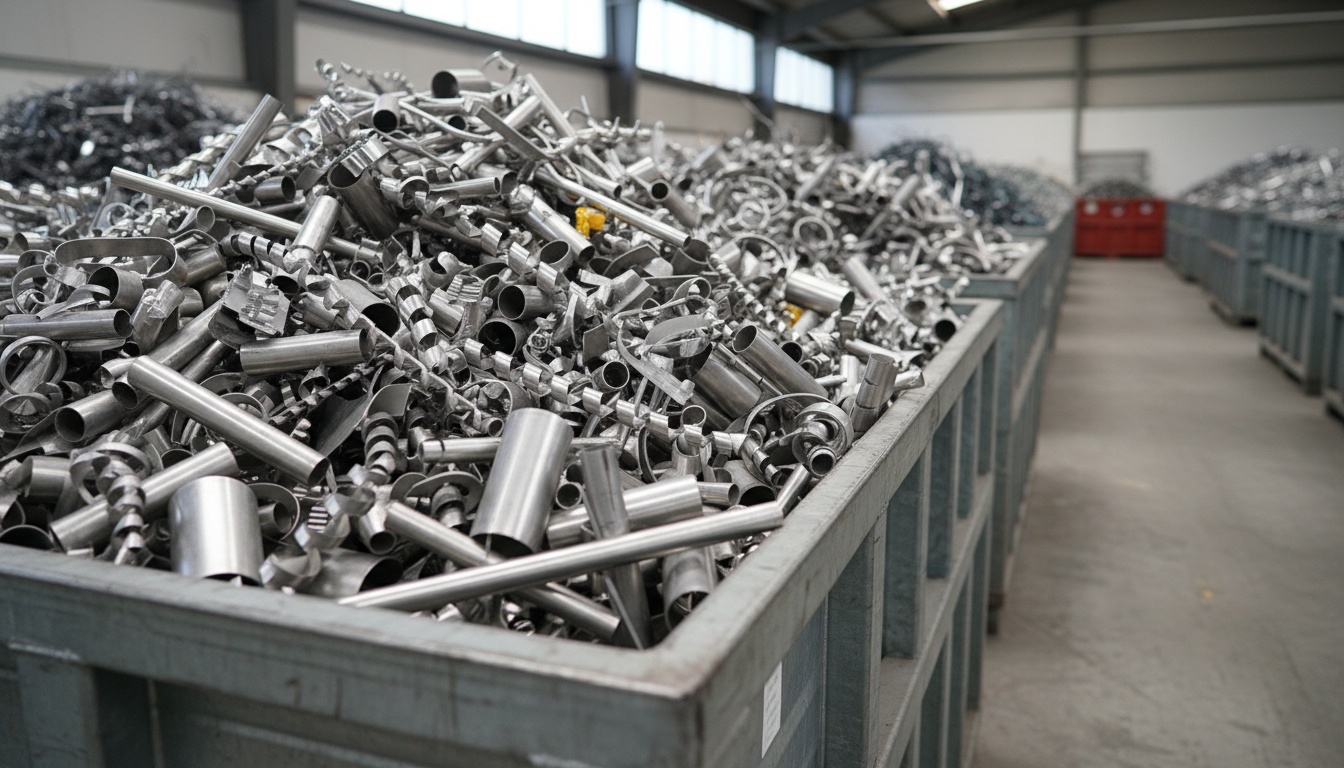
Stainless scrap is bought on chemistry, not on appearance, and the money sits in the nickel. Grade 304 — the 18/8 workhorse at roughly 18% chromium and 8–10.5% nickel — is the reference against which most stainless scrap trades. 316 and 316L add 2–3% molybdenum for chloride resistance and price well above 304 as a result. At the other end, 430 is a ferritic chrome-only grade with no nickel at all, and 409 is the exhaust-system equivalent; both are magnetic and both are worth a fraction of 304. That single fact causes most stainless disputes in the trade, because a magnet separates ferritic from austenitic material in seconds and any yard can do it — so a cargo sold as 304 that pulls to a magnet has either been mixed or was never 304. We verify with a handheld XRF analyser at the point of purchase and, on larger lots, take a melt sample: XRF gives nickel, chromium and molybdenum percentages on the spot, and the assay is what the price is calculated from.
Form changes the value as much as grade does. Solids and clean sheet remelt cleanly and carry the least discount. Turnings and swarf are a different proposition — they carry cutting oil and coolant, oxidise readily, lose more metal in the melt and often need briquetting before a furnace will take them, so they discount hard and should be contracted with an explicit oil-and-moisture ceiling rather than a handshake. Attachments matter too: carbon-steel bolts, brackets, plastic and rubber all count against the payable weight. Pricing works from the alloy content — nickel units valued against the LME nickel cash settlement plus a chrome and moly contribution, expressed as a percentage of the contained value, which typically lands 304 solids well below the prime metal price and moves with nickel week to week. Supply is sourced from fabricators, food and pharmaceutical plant decommissioning, dairy and brewery equipment, exhaust and catalytic processing and general demolition. We arrange SGS or Intertek supervision, XRF verification at loading, radiation certification, and container stuffing at 22–25 MT per 20ft box on FOB, CFR and CIF terms.
Indicative reference
$1,150–1,550 USD / MT
as at September 2026
Reference level only — not an offer, and reviewed quarterly. Levels shown are as at September 2026. Firm pricing is quoted per RFQ, subject to volume, terms and inspection.
Typical Specification
Specifications are indicative and adjusted to the agreed contract and destination requirements. Final spec confirmed on COA / SGS.
Available Grades
Applications
- Stainless remelting & billet casting
- Alloy steel & ferro-alloy production
- Foundry & investment casting
- Nickel unit recovery
Category
Metals & Recycled Scrap
Incoterms
FOB · CFR · CIF
Pricing basis
USD / MT
Inspection
SGS / Intertek at load port
Stainless Steel Scrap — buyer questions
How do I know a cargo sold as 304 really is 304?
Two checks, and both are quick. A magnet separates austenitic 304 and 316 (non-magnetic) from ferritic 430 and 409 (magnetic) — cold-worked 304 can show slight magnetism, but a cargo that pulls firmly is not what it says on the invoice. Then XRF gives you nickel, chromium and molybdenum percentages on the spot. We XRF at purchase and again at loading, and take a melt sample on volume lots so the assay, not the description, sets the price.
Why do stainless turnings discount so heavily against solids?
They carry cutting oil and coolant, they oxidise across a large surface area, and they lose materially more metal in the melt. Many furnaces will not charge them loose at all and want them briquetted first. If you are buying turnings, contract an explicit oil and moisture ceiling — we work to ≤ 2% oil and ≤ 1% moisture — and price on recovered nickel units rather than gross weight.
Is 316 worth the premium over 304 for a remelt charge?
Only if you are casting a moly-bearing grade. The 2–3% molybdenum in 316 is what you are paying for, and it is wasted value in a 304 heat. Conversely, feeding 304 into a 316 charge means buying moly separately as ferro-molybdenum, which is usually the dearer route. Tell us the grade you are casting and we will source to the charge rather than to the label.
Can you supply segregated grades or only mixed stainless?
Segregated is standard for us — 304, 316, 310, 321 and duplex kept apart at the yard and verified before shipment. Mixed stainless is available where the price justifies your own sorting, but it prices to the lowest plausible content in the box, so it only makes sense if you have sorting capacity. For most buyers, paying for segregation at origin is cheaper than paying for it in the melt.
Ready to source Stainless Scrap?
Send your quantity, specification, preferred Incoterms and destination port. We'll verify supply and respond with a workable offer — usually within one business day.
Have Stainless Scrap to sell? Submit an offer — we'll match it against live buyer demand.
More in Metal Scrap
Vessel & Ship Metal Scrap
End-of-life vessels on LDT and the plate, machinery and bronze they yield
HMS 1 & 2 Steel Scrap
Heavy melting steel in 80:20 and 70:30 mixes for EAF charges
Cast Iron Scrap
Motor blocks, heavy breakable cast and foundry borings
Copper Scrap
Millberry, Candy and Birch/Cliff to ISRI/ReMA grade
Insulated Copper Wire Scrap
ICW and cable priced on verified copper recovery
Aluminium Scrap
Taint/Tabor, 6063 extrusion, Zorba, Twitch and wheels
UBC Aluminium Scrap (Used Beverage Cans)
Mill-spec baled used beverage cans for closed-loop can sheet
Brass Scrap
Honey yellow brass, Ebony red brass and Ocean radiators
Lead Scrap & Drained Batteries
Soft lead, battery plates and RSLAB under Basel consent