
Aluminium Scrap
Taint/Tabor, 6063 extrusion, Zorba, Twitch and wheels
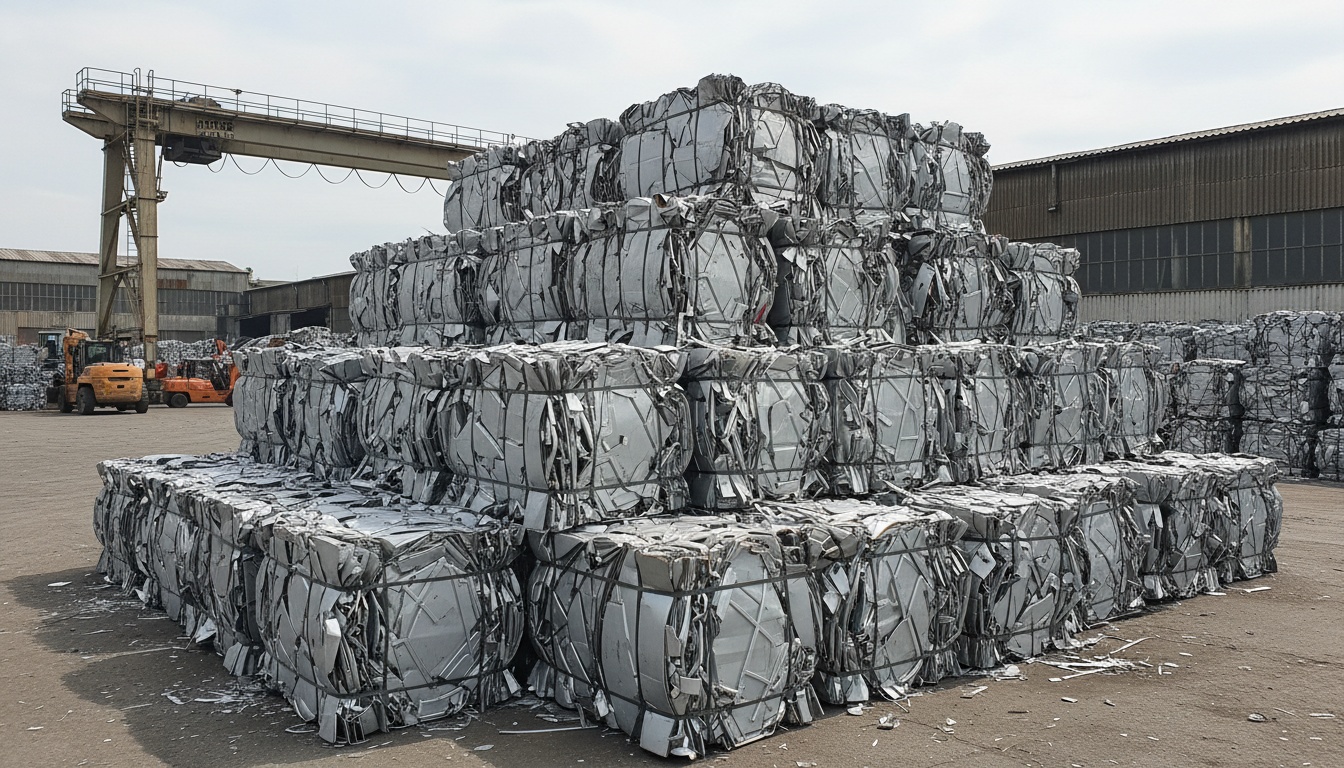
Aluminium scrap prices on alloy content and on how much metal survives the furnace. Clean 6063 extrusion is the premium of the everyday grades because it is a single, low-copper wrought alloy that a billet caster can charge almost directly — which is why the copper ceiling, usually 0.10%, belongs in the contract. Taint/Tabor is the mixed old sheet and painted siding grade, still wrought but carrying coatings and a wider alloy spread, so it discounts and suits general remelt rather than a controlled billet. Troma alloy wheels are a cast grade with good, consistent chemistry once the steel weights and valve stems are off. Tense is aluminium-copper radiator material and prices on the copper it carries as much as the aluminium. Then there are the shredder products: Zorba is the mixed non-ferrous fraction from auto and appliance shredding, typically 55–75% aluminium with the balance in copper, zinc, brass, stainless and residue, and it is bought on an assay of a sampled lot rather than on a name. Twitch is Zorba that has been through sink-float separation and comes out at roughly 95% aluminium — cleaner, dearer and much closer to a furnace-ready charge.
The unglamorous variables decide the economics. Melt loss is the first: thin, painted or oxidised material has a high surface-area-to-mass ratio and burns off, so a nominal tonne of light sheet delivers materially less liquid metal than a tonne of extrusion. Moisture is the second, and it is a safety issue as much as a commercial one — wet scrap charged into molten aluminium causes violent steam explosions, so cargoes are contracted dry and inspected for it. Iron attachments, dirt, plastic and free-standing turnings all count against payable weight, and turnings deserve their own line item because oil content and fines make them a different purchase from solids. Pricing references the LME aluminium cash settlement at a discount that widens with alloy uncertainty and preparation cost, which is why an assayed Zorba lot and a spec-clean 6063 lot can differ by hundreds of dollars a tonne. We source from extruders, fabricators, shredder operators, demolition and automotive dismantling across the Gulf, Europe, the UK and North America, with XRF verification, radiation certification, SGS or Intertek supervision at stuffing and 18–22 MT per 20ft container depending on grade and density.
Indicative reference
$1,450–2,050 USD / MT
as at September 2026
Reference level only — not an offer, and reviewed quarterly. Levels shown are as at September 2026. Firm pricing is quoted per RFQ, subject to volume, terms and inspection.
Typical Specification
Specifications are indicative and adjusted to the agreed contract and destination requirements. Final spec confirmed on COA / SGS.
Available Grades
Applications
- Billet casting & extrusion remelt
- Secondary aluminium smelting
- Die-casting alloy production
- Deoxidant for steelmaking
Category
Metals & Recycled Scrap
Incoterms
FOB · CFR · CIF
Pricing basis
USD / MT
Inspection
SGS / Intertek at load port
Aluminium Scrap — buyer questions
What is the difference between Zorba and Twitch?
Processing stage. Zorba is the mixed non-ferrous fraction straight off an auto or appliance shredder — typically 55–75% aluminium with copper, zinc, brass, stainless and residue making up the rest, so it has to be bought on an assay of a sampled lot. Twitch is Zorba that has been through sink-float separation and comes out around 95% aluminium. Twitch costs more and needs far less work before it is furnace-ready; Zorba is the better buy only if you have the separation capacity to upgrade it yourself.
Why does 6063 extrusion scrap command a premium?
Because it is a single wrought alloy with low copper, a billet caster can charge it with minimal dilution and hit specification. That is also why the copper ceiling — normally 0.10% — should be written into the contract rather than assumed, and why thermal-break plastic, anodising residue and mixed-alloy extrusion have to be excluded. Mixed sheet like Taint/Tabor does the same job for general remelt at a lower price, but not for a controlled billet.
How much melt loss should I budget for?
It depends entirely on form. Heavy clean extrusion loses very little; thin painted sheet, light siding and turnings have far more surface area per tonne and burn off correspondingly more. That gap is the real reason light grades discount, so compare grades on liquid metal delivered rather than on the per-tonne headline. We will give you the form and preparation detail you need to run that calculation before you fix.
How do you handle moisture in aluminium cargoes?
As a safety requirement, not a quality preference. Wet scrap charged into a molten bath causes steam explosions, so cargoes are contracted dry, stuffed under supervision and inspected for free water and trapped moisture in baled or briquetted material. Containers are sealed after inspection and we avoid loading during rain at open yards — a soaked bale is a hazard to the buyer's furnace crew before it is a commercial dispute.
Ready to source Aluminium Scrap?
Send your quantity, specification, preferred Incoterms and destination port. We'll verify supply and respond with a workable offer — usually within one business day.
Have Aluminium Scrap to sell? Submit an offer — we'll match it against live buyer demand.
More in Metal Scrap
Vessel & Ship Metal Scrap
End-of-life vessels on LDT and the plate, machinery and bronze they yield
HMS 1 & 2 Steel Scrap
Heavy melting steel in 80:20 and 70:30 mixes for EAF charges
Stainless Steel Scrap
304, 316, 310 and 430 solids and turnings, XRF-verified
Cast Iron Scrap
Motor blocks, heavy breakable cast and foundry borings
Copper Scrap
Millberry, Candy and Birch/Cliff to ISRI/ReMA grade
Insulated Copper Wire Scrap
ICW and cable priced on verified copper recovery
UBC Aluminium Scrap (Used Beverage Cans)
Mill-spec baled used beverage cans for closed-loop can sheet
Brass Scrap
Honey yellow brass, Ebony red brass and Ocean radiators
Lead Scrap & Drained Batteries
Soft lead, battery plates and RSLAB under Basel consent