
HMS 1 & 2 Steel Scrap
Heavy melting steel in 80:20 and 70:30 mixes for EAF charges
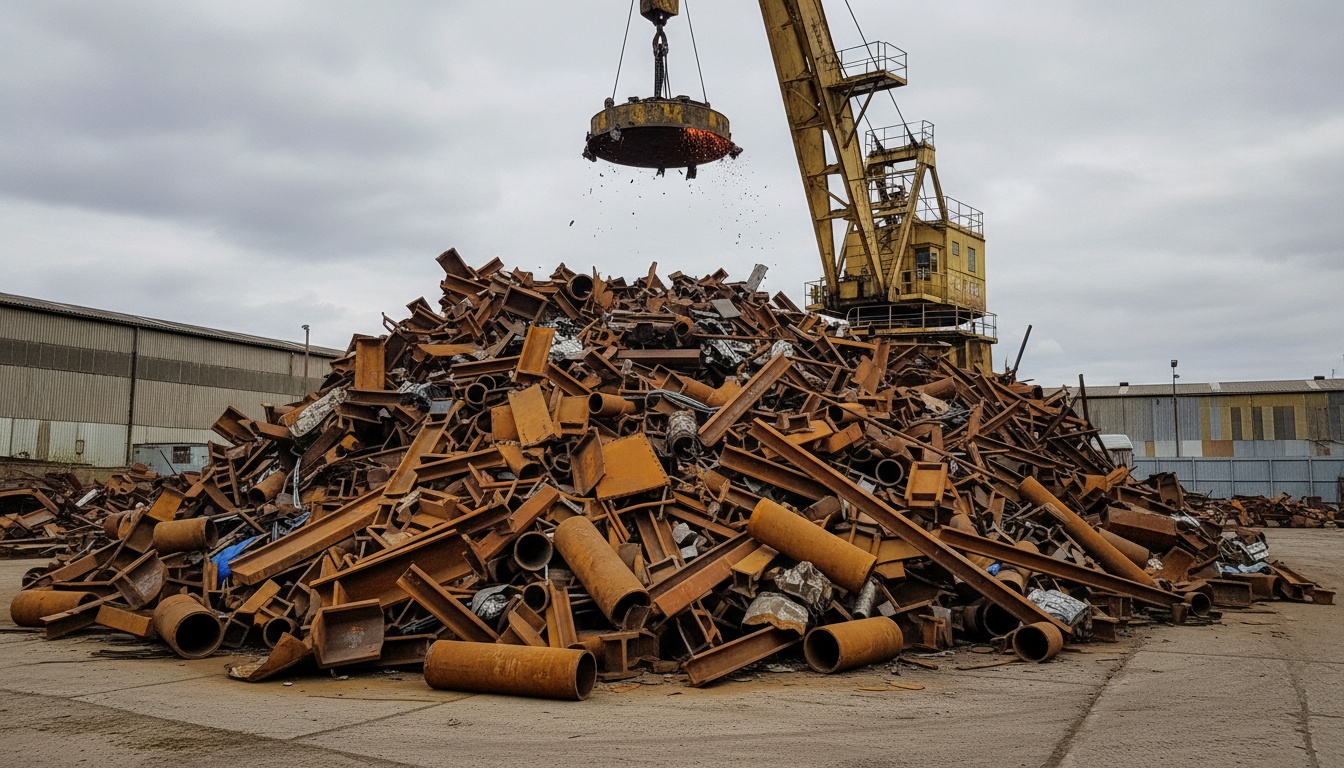
Heavy melting steel is defined by thickness and by what is allowed to be in it. HMS 1 is clean, unalloyed steel of at least 6 mm (1/4 inch) thickness, cut to charging-box size — commonly 1.5 × 0.5 m — and free of coated, plated and alloyed material. HMS 2 drops the thickness floor to roughly 3 mm (1/8 inch) and admits galvanised and blackened steel, which is why it carries a discount. Almost nobody contracts either in isolation: the export standard is HMS 1&2 in an 80:20 mix, with 70:30 traded where the buyer's furnace tolerates the lighter fraction and the price gap justifies it. The mix matters because it determines melt yield, and yield is what a melt shop actually pays for — a well-prepared 80:20 cargo should return 96–98% metallic recovery, while a badly prepared one loses the difference to dirt, moisture and non-metallic attachments. The other number to write into the contract is tramp elements, copper above all: residual copper cannot be refined out in an EAF and accumulates in the bath, so mills rolling flat or drawn products hold it near 0.25% and will reject cargoes carrying motors, wiring harnesses or unstripped electrical assemblies.
HMS competes for the charge against shredded and busheling, and the right choice follows the product being rolled. Shredded scrap is fragmentised, magnetically separated and consistent in density, which suits continuous charging and gives predictable chemistry at a premium of typically $15–35 per tonne over 80:20. Busheling and bundles are new production offcuts — the cleanest ferrous charge available and priced accordingly, worth paying for only when residuals genuinely constrain the grade being cast. For long products, rebar and merchant bar, well-prepared 80:20 remains the economic charge. Pricing is benchmarked, not listed: export cargoes are contracted against the Turkish import HMS 1&2 80:20 CFR assessment, adjusted for freight from the load port and for preparation. On execution, we arrange SGS, Intertek or Cotecna supervision at stuffing, radiation scanning with certificate, and the free-of clauses that keep a cargo out of trouble — no radioactive material, no explosives or ordnance, no sealed vessels or gas cylinders, no military scrap, no hazardous residues. Heavy grades load on weight rather than volume, at 24–27 MT into a 20ft container, with bulk vessel shipments arranged where the position is large enough to justify Handysize or Supramax tonnage.
Indicative reference
$330–375 USD / MT
as at September 2026
Reference level only — not an offer, and reviewed quarterly. Levels shown are as at September 2026. Firm pricing is quoted per RFQ, subject to volume, terms and inspection.
Typical Specification
Specifications are indicative and adjusted to the agreed contract and destination requirements. Final spec confirmed on COA / SGS.
Available Grades
Applications
- Electric-arc furnace steelmaking
- Induction furnace melting
- Re-rolling mills
- Foundry charge
Category
Metals & Recycled Scrap
Incoterms
FOB · CFR · CIF
Pricing basis
USD / MT
Inspection
SGS / Intertek at load port
HMS 1 & 2 Steel Scrap — buyer questions
What is the actual difference between HMS 1 and HMS 2?
Thickness and what is allowed in the mix. HMS 1 is unalloyed steel at least 6 mm thick, cut to charging size, with no coated or plated material. HMS 2 drops to about 3 mm and permits galvanised and blackened steel. HMS 2 therefore carries more surface area per tonne, more zinc and more melt loss, which is exactly why it discounts to HMS 1 and why the 80:20 mix exists as the trading standard.
Should I buy 80:20 HMS or shredded scrap?
Follow the product you are casting. Shredded is fragmentised and magnetically cleaned, so density and chemistry are consistent and it charges continuously — worth its typical $15–35/MT premium if you are rolling flat or drawn products where residuals bite. For rebar, merchant bar and general long products, a well-prepared 80:20 does the same job for less. We can quote both on the same tonnage so the premium is visible against your yield.
How is HMS priced — is there a published index?
Yes. Export cargoes are contracted against the Turkish import HMS 1&2 80:20 CFR assessment, which is the closest thing the ferrous trade has to a global benchmark, then adjusted for freight from the load port and for preparation and yield. That is why we ask for tonnage, grade and discharge port before quoting — without the freight leg, a number off the index means nothing to your landed cost.
What guarantees cover radiation and prohibited material?
Every cargo we broker carries a written free-of clause — no radioactive material, explosives or ordnance, sealed vessels or gas cylinders, military scrap or hazardous residues — backed by radiation scanning at loading with a certificate issued by the inspection agency. We appoint SGS, Intertek, Cotecna or Bureau Veritas to supervise stuffing and can add pre-shipment inspection where the destination requires it, such as the PSIC that Indian importers need from a DGFT-approved agency.
Ready to source HMS Steel Scrap?
Send your quantity, specification, preferred Incoterms and destination port. We'll verify supply and respond with a workable offer — usually within one business day.
Have HMS Steel Scrap to sell? Submit an offer — we'll match it against live buyer demand.
More in Metal Scrap
Vessel & Ship Metal Scrap
End-of-life vessels on LDT and the plate, machinery and bronze they yield
Stainless Steel Scrap
304, 316, 310 and 430 solids and turnings, XRF-verified
Cast Iron Scrap
Motor blocks, heavy breakable cast and foundry borings
Copper Scrap
Millberry, Candy and Birch/Cliff to ISRI/ReMA grade
Insulated Copper Wire Scrap
ICW and cable priced on verified copper recovery
Aluminium Scrap
Taint/Tabor, 6063 extrusion, Zorba, Twitch and wheels
UBC Aluminium Scrap (Used Beverage Cans)
Mill-spec baled used beverage cans for closed-loop can sheet
Brass Scrap
Honey yellow brass, Ebony red brass and Ocean radiators
Lead Scrap & Drained Batteries
Soft lead, battery plates and RSLAB under Basel consent