
Brass Scrap
Honey yellow brass, Ebony red brass and Ocean radiators
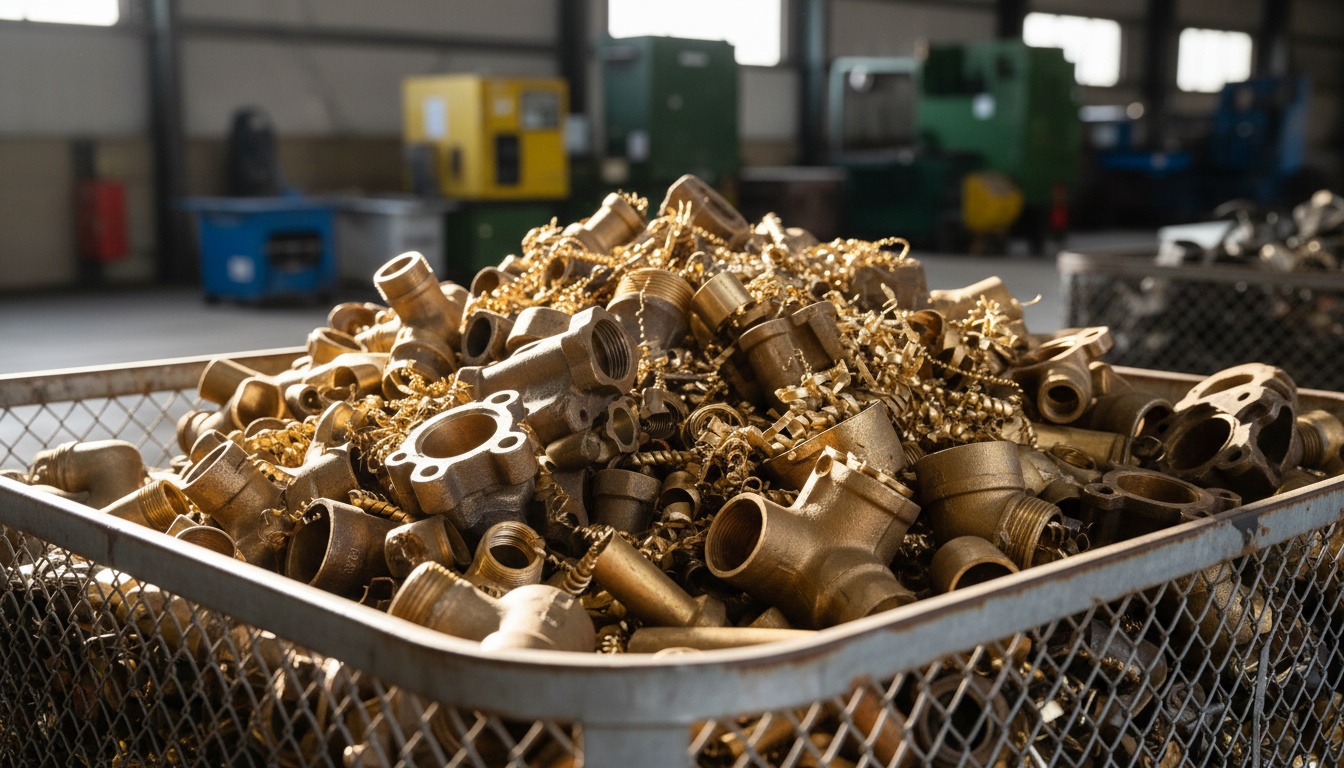
Brass is a copper alloy, and it is bought as one. Honey — yellow brass solids — runs roughly 60–63% copper with the balance mostly zinc, and covers the everyday stream of fittings, valves, locks, handles, sheet and rod. Ebony is red brass, the 85-5-5-5 composition family at around 85% copper, worth substantially more per tonne for exactly that reason and worth segregating at the yard rather than letting it disappear into a yellow bale. Ocean covers mixed brass radiators, which are really a copper-and-brass composite and price on the declared split between the two. Below the solids sit brass turnings and borings, which carry cutting oil and fines and discount accordingly, and brass shells, which are clean and consistent but must be certified fired, inert and free of primers and propellant before anyone will load them. Because value tracks contained copper, the working rule is simple: segregate by copper content, because a mixed bale prices to the lowest plausible content in it.
Two specification points do more damage than they should when they are left out of the contract. The first is lead. Free-machining brasses such as CuZn39Pb3 carry up to about 3.5% lead by design, and buyers supplying drinking-water fittings — or working to EU or US low-lead plumbing rules — need the lead content declared and held, not discovered on assay. The second is iron and non-metallic attachment: steel screws, springs, plastic handles, rubber seals and chrome plating all reduce payable metal, and chrome-plated brass in particular is often mistaken for yellow solids. We XRF at purchase and again at loading, contract an attachment ceiling, and price against the LME copper cash settlement applied to the contained copper, less a refining allowance that varies by grade and preparation. Sourcing runs through plumbing and valve manufacturers, machine shops, demolition, radiator and HVAC dismantling and general yards across the Gulf, Europe, the UK and North America, with radiation certification, SGS or Intertek supervision and 22–25 MT per 20ft container on FOB, CFR and CIF terms.
Indicative reference
$4,300–5,400 USD / MT
as at September 2026
Reference level only — not an offer, and reviewed quarterly. Levels shown are as at September 2026. Firm pricing is quoted per RFQ, subject to volume, terms and inspection.
Typical Specification
Specifications are indicative and adjusted to the agreed contract and destination requirements. Final spec confirmed on COA / SGS.
Available Grades
Applications
- Brass ingot & billet casting
- Valve, fitting & sanitaryware manufacture
- Secondary copper refining
- Bronze & alloy foundry
Category
Metals & Recycled Scrap
Incoterms
FOB · CFR · CIF
Pricing basis
USD / MT
Inspection
SGS / Intertek at load port
Brass Scrap — buyer questions
Why is red brass worth so much more than yellow brass?
Copper content. Yellow brass (Honey) runs 60–63% copper with the balance mostly zinc; red brass (Ebony) is the 85-5-5-5 family at around 85% copper. Since brass is priced on contained copper against the LME settlement, that gap flows straight through to the tonne price. It is also why letting red brass disappear into a yellow bale is one of the most expensive sorting mistakes a yard can make.
Do you declare lead content on brass cargoes?
Yes, and you should insist on it. Free-machining brasses such as CuZn39Pb3 carry up to about 3.5% lead by design. If you are supplying drinking-water fittings or working to low-lead plumbing rules in the EU or US, the lead ceiling has to be a contract term verified by XRF, not something you find out on assay after the cargo has discharged.
How are brass radiators priced?
On the declared copper-to-brass split, because Ocean-grade radiators are a composite rather than a single alloy. A radiator lot with a high copper-tube content is worth materially more than one that is mostly brass tank and header. We have the split verified before contracting rather than pricing the whole lot at a blended guess, which protects both sides when the mix turns out different from the description.
What contamination reduces payable weight most?
Steel screws and springs, plastic handles, rubber seals and chrome plating. Chrome-plated brass is the one that catches people out — it looks like yellow solids and assays differently. We XRF at purchase and at loading and contract an attachment ceiling, normally 1%, so the payable metal reflects what a refiner will actually recover.
Ready to source Brass Scrap?
Send your quantity, specification, preferred Incoterms and destination port. We'll verify supply and respond with a workable offer — usually within one business day.
Have Brass Scrap to sell? Submit an offer — we'll match it against live buyer demand.
More in Metal Scrap
Vessel & Ship Metal Scrap
End-of-life vessels on LDT and the plate, machinery and bronze they yield
HMS 1 & 2 Steel Scrap
Heavy melting steel in 80:20 and 70:30 mixes for EAF charges
Stainless Steel Scrap
304, 316, 310 and 430 solids and turnings, XRF-verified
Cast Iron Scrap
Motor blocks, heavy breakable cast and foundry borings
Copper Scrap
Millberry, Candy and Birch/Cliff to ISRI/ReMA grade
Insulated Copper Wire Scrap
ICW and cable priced on verified copper recovery
Aluminium Scrap
Taint/Tabor, 6063 extrusion, Zorba, Twitch and wheels
UBC Aluminium Scrap (Used Beverage Cans)
Mill-spec baled used beverage cans for closed-loop can sheet
Lead Scrap & Drained Batteries
Soft lead, battery plates and RSLAB under Basel consent