
UBC Aluminium Scrap (Used Beverage Cans)
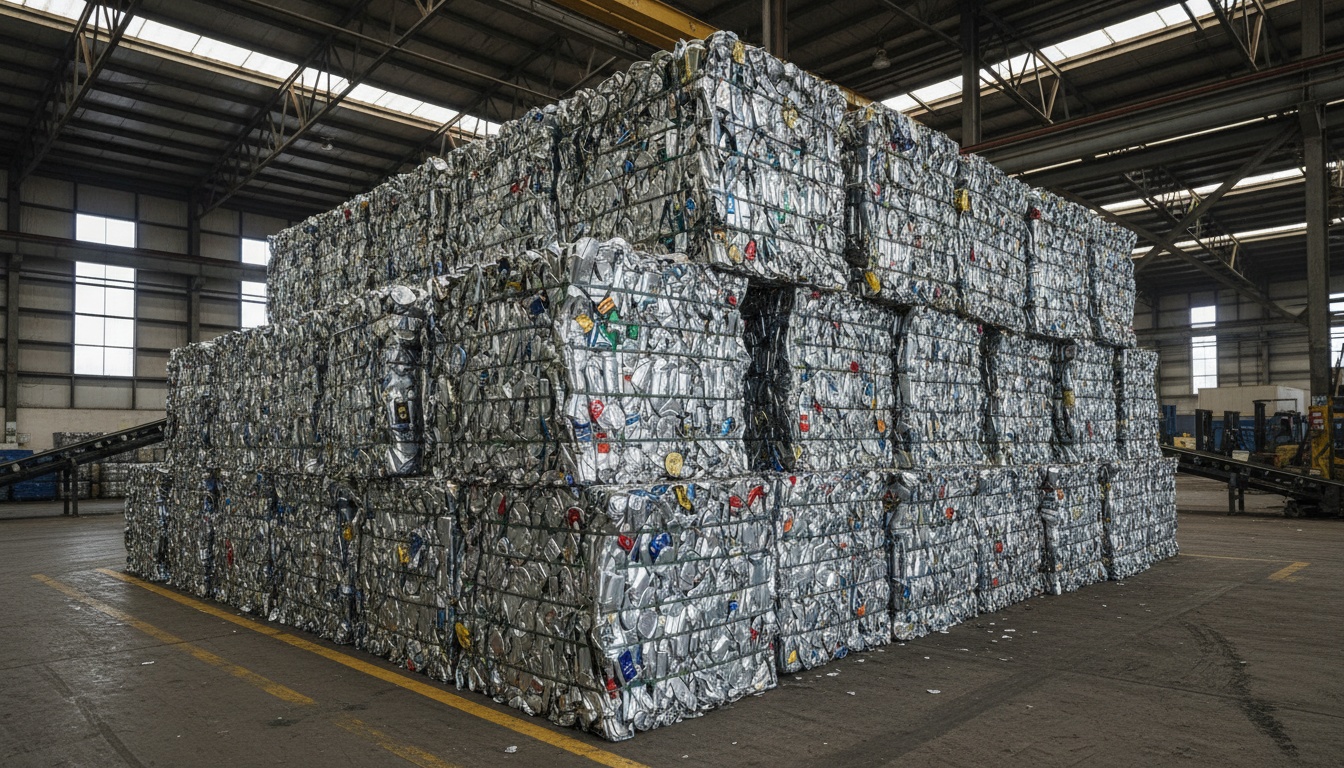
Mill-spec baled used beverage cans for closed-loop can sheet
Used beverage cans are the closest thing aluminium has to a closed loop, and mills that roll can sheet buy them as a raw material rather than as scrap. The reason is alloy consistency: a can body is 3004 and the lid is 5182, and the two together sit in a narrow, predictable chemistry band that lets a rolling mill return the metal to can stock with modest correction. That is worth a premium over general mixed aluminium — but only if the bale is to specification. Mill specifications are written around density, moisture and contamination: bales are contracted at a minimum density, commonly around 400–500 kg/m³, to dimensions the mill's charging system can handle, at a moisture ceiling in the low single digits, and free of steel cans, aerosol cans, plastic bottles, glass, liquid residue, lead and other loose non-ferrous metal. Aerosols matter more than their volume suggests: a pressurised can in a shredder or a delacquering furnace is a genuine hazard, and the free-of clause covering them is not boilerplate.
The economics come down to metallic recovery after the coating comes off. UBC arrives lacquered and printed, and that organic coating is burned off in a delacquering or thermal decoating step before melting; a well-prepared, dry, contaminant-free bale returns roughly 88–92% metallic recovery, while wet or dirty material loses several points and can foul the decoating line. This is why UBC prices per tonne of contained metal in practice even when it is invoiced per tonne gross, and why the moisture ceiling earns its place in the contract. We source baled, briquetted and shredded-and-decoated UBC from collection systems, deposit schemes and beverage-industry offcut streams across the Gulf, Europe, the UK and North America, arrange SGS or Intertek verification of bale density, moisture and contamination at loading, radiation scanning with certificate, and Basel Annex VII documentation where the shipment route requires it. Bales load at roughly 18–20 MT per 20ft container depending on density, on FOB, CFR and CIF terms.
Indicative reference
$1,550–1,900 USD / MT
as at September 2026
Reference level only — not an offer, and reviewed quarterly. Levels shown are as at September 2026. Firm pricing is quoted per RFQ, subject to volume, terms and inspection.
Typical Specification
Specifications are indicative and adjusted to the agreed contract and destination requirements. Final spec confirmed on COA / SGS.
Available Grades
Applications
- Can sheet rolling (closed loop)
- Secondary aluminium smelting
- Die-casting alloy production
- Deoxidant for steelmaking
Category
Metals & Recycled Scrap
Incoterms
FOB · CFR · CIF
Pricing basis
USD / MT
Inspection
SGS / Intertek at load port
UBC Aluminium Scrap (Used Beverage Cans) — buyer questions
Why does UBC price above general mixed aluminium scrap?
Alloy consistency. A can body is 3004 and the lid is 5182, so a bale of UBC lands in a narrow chemistry band that a rolling mill can return to can sheet with modest correction — a closed loop rather than a downgrade. Mixed aluminium has to be diluted and corrected into whatever alloy the caster can reach, which is worth less. The premium survives only if the bale meets the mill's density, moisture and contamination specification.
What bale specification do mills actually require?
Density first — commonly around 400–500 kg/m³ — to bale dimensions the charging system can take, then a moisture ceiling in the low single digits, then the free-of list: no steel or aerosol cans, no plastic, glass or liquid residue, no lead or loose non-ferrous. We verify density, moisture and contamination through SGS or Intertek at loading rather than accepting the baler's word for it.
What metallic recovery should I expect from a UBC bale?
Around 88–92% from dry, clean, well-prepared material after de-lacquering. Wet or contaminated bales lose several points and can foul the decoating line, which costs more than the metal. In practice UBC is valued on contained metal even when it is invoiced gross — so the moisture ceiling is a commercial term, not a formality.
Why are aerosol cans singled out in the free-of clause?
Because a pressurised can entering a shredder or a decoating furnace is a real hazard to the plant and the people running it, and a handful in a bale is enough to cause an incident. The same logic covers liquid residue and sealed containers. It is one of the clauses we will not soften, and inspection at loading is there specifically to catch it.
Ready to source UBC Scrap?
Send your quantity, specification, preferred Incoterms and destination port. We'll verify supply and respond with a workable offer — usually within one business day.
Have UBC Scrap to sell? Submit an offer — we'll match it against live buyer demand.
More in Metal Scrap
Vessel & Ship Metal Scrap
End-of-life vessels on LDT and the plate, machinery and bronze they yield
HMS 1 & 2 Steel Scrap
Heavy melting steel in 80:20 and 70:30 mixes for EAF charges
Stainless Steel Scrap
304, 316, 310 and 430 solids and turnings, XRF-verified
Cast Iron Scrap
Motor blocks, heavy breakable cast and foundry borings
Copper Scrap
Millberry, Candy and Birch/Cliff to ISRI/ReMA grade
Insulated Copper Wire Scrap
ICW and cable priced on verified copper recovery
Aluminium Scrap
Taint/Tabor, 6063 extrusion, Zorba, Twitch and wheels
Brass Scrap
Honey yellow brass, Ebony red brass and Ocean radiators
Lead Scrap & Drained Batteries
Soft lead, battery plates and RSLAB under Basel consent