
Cast Iron Scrap
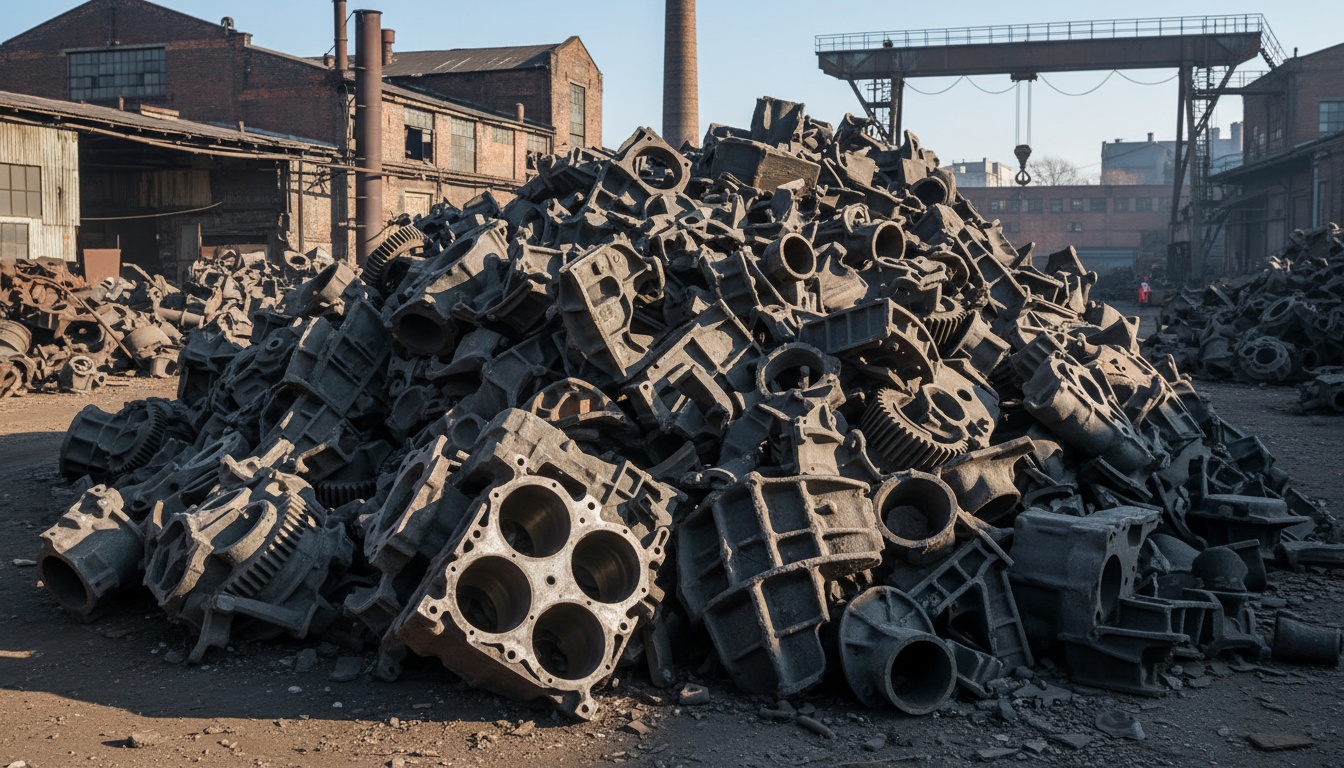
Motor blocks, heavy breakable cast and foundry borings
Cast iron is a separate purchase from steel scrap because it is a separate material: 2.5–4% carbon against steel's fraction of a percent, plus 1–3% silicon, which is precisely what a foundry wants in a cupola or induction charge and what a steel mill does not. The grades that trade are heavy breakable cast — machinery bases, pipe, radiators, counterweights and heavy castings broken to charge size — clean auto cast, motor blocks with the aluminium and non-ferrous attachments either stripped or explicitly declared, and cast iron borings and machine-shop turnings from engineering works. Size is a contractual term, not a detail: cupola charging and induction furnace coil geometry both cap the piece dimensions a foundry can accept, and a cargo of unbroken engine blocks or two-metre pipe sections is an expensive problem at the far end. We contract to the buyer's charge dimensions, commonly 0.5 m maximum, with weight limits per piece where the furnace requires it.
The two things that decide whether a cast cargo is worth its price are attachments and preparation. Unstripped motor blocks carry aluminium pistons, copper windings, bearing metal and sometimes residual oil — all of which reduce the payable iron and, in the case of copper, contaminate the melt. If they are there they must be declared and priced, not discovered on discharge. Borings and turnings carry cutting oil, swarf fines and moisture, oxidise quickly in storage and are often briquetted before charging to avoid blow-back and yield loss; contract them with an oil and moisture ceiling and expect a discount to solids that reflects the real recovery, not the theoretical one. Free-of clauses run the same as ferrous generally — no radioactive material, no sealed vessels, no explosives — with radiation scanning and a certificate at loading. Cast is dense, so containers load out on weight at around 25–27 MT per 20ft box, and we arrange SGS or Intertek supervision at stuffing on FOB, CFR and CIF terms.
Indicative reference
$290–360 USD / MT
as at September 2026
Reference level only — not an offer, and reviewed quarterly. Levels shown are as at September 2026. Firm pricing is quoted per RFQ, subject to volume, terms and inspection.
Typical Specification
Specifications are indicative and adjusted to the agreed contract and destination requirements. Final spec confirmed on COA / SGS.
Available Grades
Applications
- Cupola & induction foundry charge
- Grey and ductile iron casting
- Counterweight & pipe casting
- Brake disc & automotive castings
Category
Metals & Recycled Scrap
Incoterms
FOB · CFR · CIF
Pricing basis
USD / MT
Inspection
SGS / Intertek at load port
Cast Iron Scrap — buyer questions
Why is cast iron scrap priced separately from HMS?
Different chemistry, different buyer. Cast runs 2.5–4% carbon and 1–3% silicon, which is what a foundry wants in a cupola or induction charge and what a steel mill has to dilute away. Foundries pay for cast on its own merits; a steel melt shop treats it as a contaminant in an HMS cargo. Keeping the two segregated at the yard is worth real money on both sides.
Do you supply stripped or unstripped motor blocks?
Both, but the difference is written into the contract and the price. Unstripped blocks carry aluminium pistons, copper windings and bearing metal, which cut the payable iron and put copper into a melt that does not want it. If you are buying unstripped we declare it up front and price the attachments in. What we will not do is ship unstripped material against a clean-cast specification.
What size do you cut cast iron to?
To your charge. Cupola charging and induction coil geometry both cap piece dimensions, so we contract to the buyer's number — commonly 0.5 m maximum, with per-piece weight limits where the furnace needs them. Unbroken blocks and long pipe sections are cheap to buy and expensive to handle at the far end, so it is worth specifying this before the cargo is stuffed rather than after.
Are cast iron borings worth buying?
They are, if the price reflects the real recovery. Borings carry cutting oil, fines and moisture, oxidise fast and often need briquetting before charging. Contract an oil and moisture ceiling, price against recovered metal rather than gross weight, and they can be a genuinely economic charge component. Bought loose on a solids price, they are not.
Ready to source Cast Iron Scrap?
Send your quantity, specification, preferred Incoterms and destination port. We'll verify supply and respond with a workable offer — usually within one business day.
Have Cast Iron Scrap to sell? Submit an offer — we'll match it against live buyer demand.
More in Metal Scrap
Vessel & Ship Metal Scrap
End-of-life vessels on LDT and the plate, machinery and bronze they yield
HMS 1 & 2 Steel Scrap
Heavy melting steel in 80:20 and 70:30 mixes for EAF charges
Stainless Steel Scrap
304, 316, 310 and 430 solids and turnings, XRF-verified
Copper Scrap
Millberry, Candy and Birch/Cliff to ISRI/ReMA grade
Insulated Copper Wire Scrap
ICW and cable priced on verified copper recovery
Aluminium Scrap
Taint/Tabor, 6063 extrusion, Zorba, Twitch and wheels
UBC Aluminium Scrap (Used Beverage Cans)
Mill-spec baled used beverage cans for closed-loop can sheet
Brass Scrap
Honey yellow brass, Ebony red brass and Ocean radiators
Lead Scrap & Drained Batteries
Soft lead, battery plates and RSLAB under Basel consent