
Sulphur Bentonite 90%
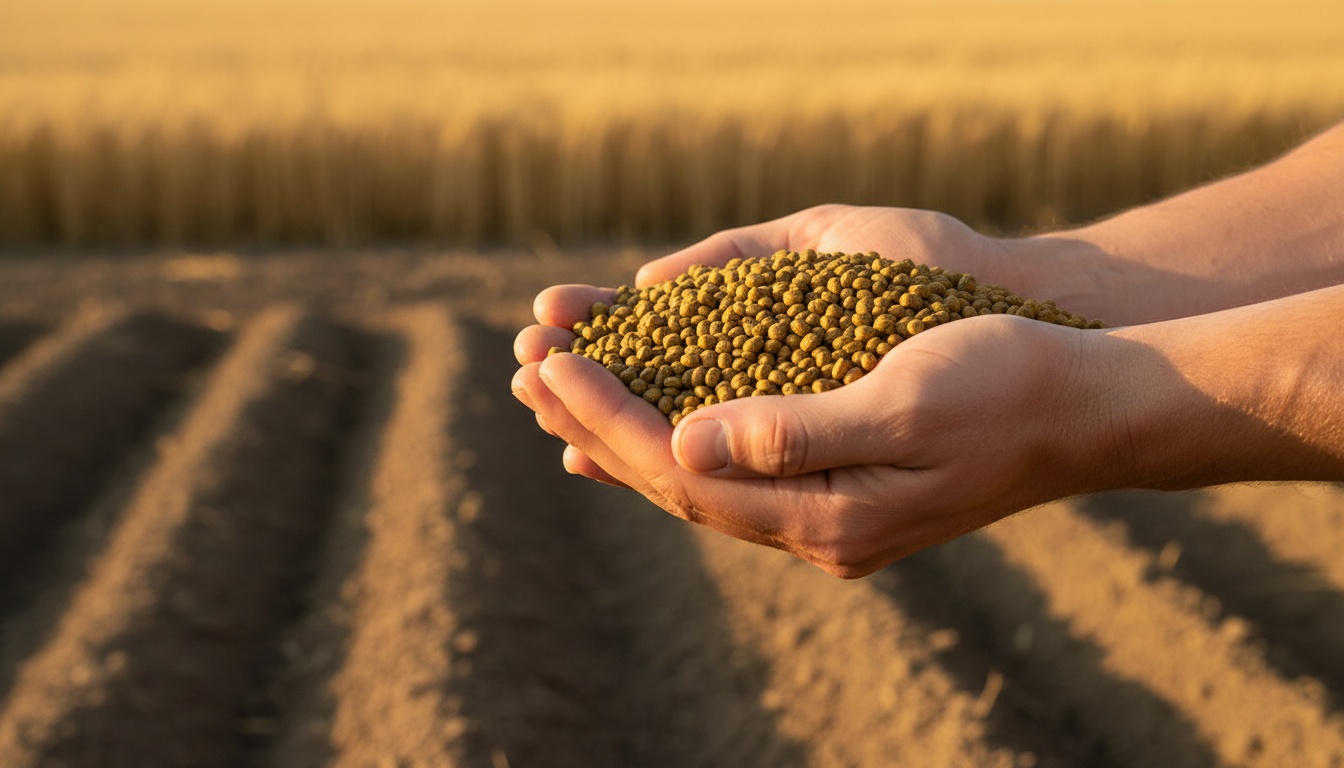
90% S pastilles that disperse on contact with moisture
Sulphur bentonite is a fertilizer product rather than a chemical feedstock, and the 10% bentonite clay in it is the entire point. Elemental sulphur on its own is agronomically slow: a hard 2–4 mm pastille sitting in soil has very little surface area, so the bacteria that oxidise sulphur to plant-available sulphate work on it for months. Blend in swelling bentonite and the pastille absorbs soil moisture, expands and disintegrates into fine particles within days — multiplying the surface area by orders of magnitude and pulling the oxidation window down from a season to weeks. That is why the standard analysis is 90% S with 10% bentonite: enough clay to guarantee dispersion, not so much that you are freighting inert filler. Pastilles are typically 2–4 mm, moisture ≤ 1%, with hardness and a dispersion or disintegration test being the two acceptance criteria that actually separate a good product from a cosmetically similar one.
Buy sulphur bentonite instead of prilled or powdered elemental sulphur when the product is going into the ground as a nutrient and the crop needs the sulphur this season. Its granular size and hardness match urea, DAP, MAP and MOP closely enough to blend and spread without segregation, so it drops straight into a bulk-blend NPK line and through a standard spreader — which powder cannot do at all, and which plain prilled sulphur does mechanically but not agronomically, since a plain prill just sits there. Against a sulphate fertilizer such as ammonium sulphate or gypsum, you are trading immediate availability for concentration and economy: at 90% S it carries roughly four times the sulphur of ammonium sulphate per tonne, so you move and spread far less material for the same nutrient, and the bentonite recovers most of the speed you gave up. Oilseeds, brassicas, alfalfa, maize and any high-pH soil needing acidification are the natural fits. CBIL supplies sulphur bentonite pastilles against COA and SGS verification of sulphur content, bentonite content, moisture, particle size, hardness and dispersion, in 25 kg and 50 kg bags, 1 MT jumbo bags and bulk, on FOB, CFR and CIF terms.
Indicative reference
$210–340 USD / MT
as at September 2026
Reference level only — not an offer, and reviewed quarterly. Levels shown are as at September 2026. Firm pricing is quoted per RFQ, subject to volume, terms and inspection.
Typical Specification
Specifications are indicative and adjusted to the agreed contract and destination requirements. Final spec confirmed on COA / SGS.
Available Grades
Applications
- Bulk-blend NPK fertilizer
- Oilseed & brassica sulphur nutrition
- Alkaline soil pH correction
- Direct-application soil amendment
- Fertilizer blending & bagging plants
Category
Petroleum & Energy
Incoterms
FOB · CFR · CIF
Pricing basis
USD / MT
Inspection
SGS / Intertek at load port
Sulphur Bentonite 90% — buyer questions
Why pay a premium over plain prilled sulphur for the field?
Because a plain prill barely works in-season. Elemental sulphur only becomes plant-available after soil bacteria oxidise it, and that rate depends almost entirely on surface area. A hard prill keeps its surface area for months; a bentonite pastille absorbs moisture, swells and breaks into fine particles within days, so the same tonne of sulphur delivers nutrition in the current crop rather than the next one. If you are blending for agronomic effect, the premium buys the effect.
How does it compare with ammonium sulphate or gypsum?
On availability, the sulphate sources win — they are immediately plant-available, no oxidation needed. On concentration and logistics, sulphur bentonite wins decisively: 90% S against roughly 24% in ammonium sulphate and around 17% in gypsum, so you handle, freight and spread a quarter of the tonnage for the same nutrient. Many programmes use both — a sulphate for the immediate need and bentonite sulphur to build the reserve.
Will it blend with urea and DAP without segregating?
Yes, that is what the 2–4 mm pastille is sized for. Particle size and hardness are close enough to standard granular urea, DAP, MAP and MOP that a bulk blend stays homogeneous through the mixer, the bag and the spreader. Ask for the size distribution and hardness figures if your blend already runs a tight particle-matching spec, and we will match the source to it.
What tests should I insist on in the COA?
Sulphur and bentonite content, moisture, particle size distribution, hardness and — most importantly — a dispersion or disintegration test in water. Dispersion is the one that proves the bentonite is doing its job; a pastille that looks right and analyses at 90% S but does not break down in moisture is agronomically no better than a plain prill. We verify dispersion alongside the standard panel before a lot is presented.
Ready to source Sulphur Bentonite?
Send your quantity, specification, preferred Incoterms and destination port. We'll verify supply and respond with a workable offer — usually within one business day.
Have Sulphur Bentonite to sell? Submit an offer — we'll match it against live buyer demand.
More in Sulphur (Granular & Lump)
Lump Sulphur (Crushed)
Crushed block sulphur, 99.8% min, bulk & jumbo bags
Granular Sulphur
Formed 2–6 mm granules, low friability, deep-sea grade
Prilled Sulphur
Uniform 1–4 mm prills for bagged & blended use
Sulphur Powder (Micronized)
Micronized 200–325 mesh for agriculture & rubber
Liquid Sulphur (Molten)
Molten sulphur at 135–145°C, no forming, no dust