Egyptian Giza Cotton
Giza 86, 88, 92 & 94 — hand-picked ELS from the Delta
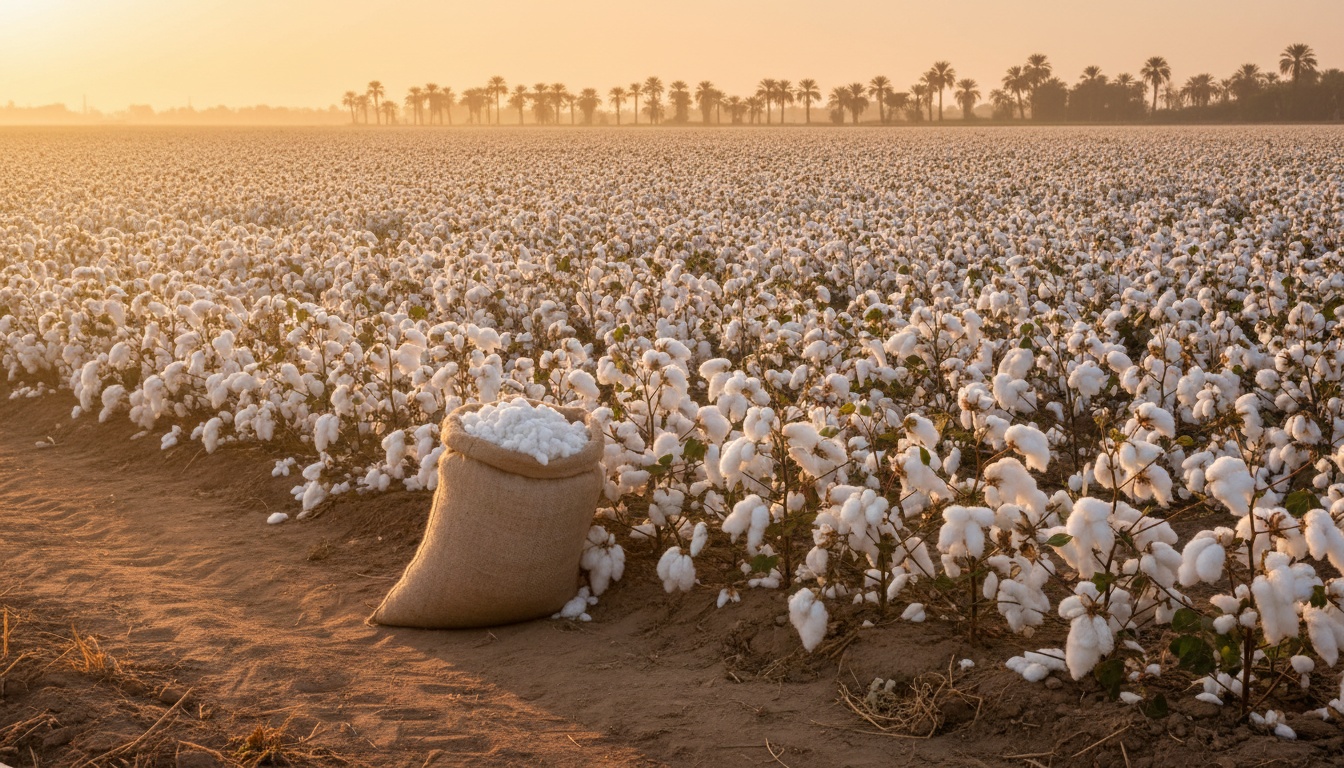
Egyptian cotton is contracted by Giza variety number, not by the country name, and that distinction is the whole commercial story. Giza 45 is the legendary extra long staple grown in a small area of the Delta in tiny volume; Giza 87, 92 and 96 are the current ELS varieties at 1-3/8 inch and above; Giza 86, 90 and 94 are long staple at roughly 1-1/4 to 1-5/16 inch and account for far more of the crop. The fibre's reputation rests on fineness and lustre — micronaire typically 3.2 to 4.2, finer than most Upland — combined with hand picking, which keeps trash and immature fibre low and does far less mechanical damage to the lint than a spindle picker. Classing follows Egyptian government standards alongside HVI, with the Cotton Egypt Association administering the Egyptian Cotton logo and its licensing.
Buy Giza where fineness and lustre are the product and the buyer knows the difference: luxury bedding and sheeting, fine shirting, premium towelling where absorbency and softness carry the sale, and heritage or provenance-led brands. Buy the variety number you actually need, because the gap between an ELS Giza 92 and a long-staple Giza 86 is substantial in both spinning performance and price, and both are legitimately “Egyptian cotton”. That loose usage is exactly where the trade goes wrong. Independent testing has repeatedly found products labelled Egyptian cotton containing little or none, and the volume sold worldwide exceeds Egyptian production by a wide margin. Contract the Giza number, require the licensing chain, and treat a cheap offer of “Egyptian cotton” as what it almost certainly is. CBIL brokers Egyptian cotton against Giza variety, staple, micronaire, strength, grade and Cotton Egypt licensing, on FOB Alexandria and Damietta, CFR and CIF terms.
Indicative reference
$5,000–8,500 USD / MT
as at September 2026
Reference level only — not an offer, and reviewed quarterly. Levels shown are as at September 2026. Firm pricing is quoted per RFQ, subject to volume, terms and inspection.
Typical Specification
Specifications are indicative and adjusted to the agreed contract and destination requirements. Final spec confirmed on COA / SGS.
Available Grades
Applications
- Luxury bedding & sheeting
- Fine shirting
- Premium towelling
- Heritage & provenance brands
- Fine-count spinning
Category
Agri-Foods, Spices & Nuts
Incoterms
FOB · CFR · CIF
Pricing basis
USD / MT
Inspection
SGS / Intertek at load port
Egyptian Giza Cotton — buyer questions
Why contract the Giza number rather than just 'Egyptian cotton'?
Because the varieties differ enormously. Giza 92 and 87 are extra long staple above 1-3/8 inch; Giza 86 and 94 are long staple at roughly 1-1/4 to 1-5/16. Both are legitimately Egyptian cotton and the price and spinning performance are not close. A contract that says only 'Egyptian' has specified almost nothing.
How much counterfeiting is there really?
Enough that it is the defining risk of this trade. Far more product is sold worldwide as Egyptian cotton than Egypt produces, and independent testing has repeatedly found labelled goods containing little or none. That is why the Cotton Egypt Association licenses the logo and operates verification. Contract the Giza number, require the licensing chain, and be suspicious of a cheap offer.
Does hand picking actually improve the lint?
Yes, in two measurable ways. It keeps trash and immature fibre low because the picker selects open bolls, and it does far less mechanical damage than a spindle picker, which preserves fibre length and reduces neps. The trade-off is labour cost and, in many origins, contamination risk from the picking process — Egypt manages that better than most hand-picking origins.
Giza or Pima for luxury bedding?
Both work and the choice often comes down to verification and marketing. Giza carries the historic name and exceptional fineness; Pima has USDA classing on every bale and the Supima chain of custody, which makes provenance much easier to prove. If your brand story leans on Egypt, buy Giza by number with licensing. If it leans on verifiable quality, Pima is simpler.
Ready to source Egyptian Giza?
Send your quantity, specification, preferred Incoterms and destination port. We'll verify supply and respond with a workable offer — usually within one business day.
Have Egyptian Giza to sell? Submit an offer — we'll match it against live buyer demand.
More in Cotton
US Upland Cotton
Memphis, Texas & California growths — USDA HVI classed
Pima & Supima Cotton
American ELS — 1-3/8 inch and above, 40+ g/tex
Indian Cotton (Shankar-6)
Shankar-6, MCU-5 & DCH-32 — the volume medium staple
Brazilian Cotton
Mato Grosso & Bahia — machine-picked, low contamination
West African Cotton
CFA zone — hand-picked, notably clean, medium staple
Cotton Yarn
Carded & combed, ring and open-end, Ne 10 to Ne 80