Cotton Yarn
Carded & combed, ring and open-end, Ne 10 to Ne 80
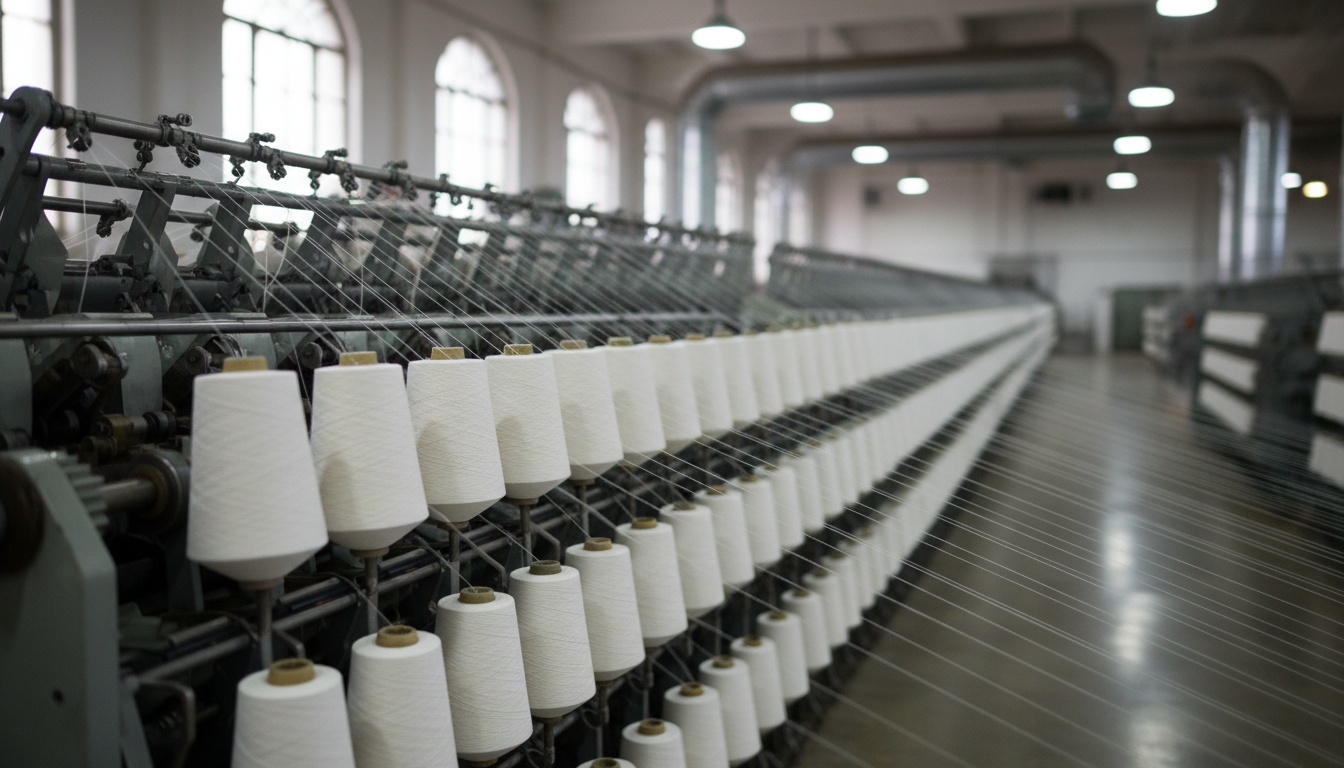
Cotton yarn is contracted on count, spinning system and quality class, and the three interact. Count is expressed in the English system as Ne — the higher the number the finer the yarn, running from Ne 10 for heavy weaving and denim through Ne 20 to 30 for general knitting up to Ne 60 and above for fine shirting, which requires long or extra long staple fibre to spin at all. Spinning system divides ring-spun, which is stronger, smoother and used for quality knitwear and shirting, from open-end or rotor spun, which is faster, cheaper, bulkier and suits denim, towelling and heavy fabrics. Quality class divides carded from combed: combing removes short fibres and neps, producing a cleaner, stronger, more even yarn at a cost of roughly 15 to 20% fibre loss, which is why combed yarn costs materially more. Contracts also specify twist, single or doubled construction, greige or dyed, and evenness and imperfection counts on Uster or equivalent testing.
Buy yarn rather than lint when you knit or weave but do not spin — which is most of the garment industry. It removes the capital, technical and labour burden of spinning and lets you buy exactly the count and quality a fabric needs. The trade-off is control and margin: you are accepting someone else's fibre selection and spinning quality, and paying their conversion margin. Match the specification to the fabric honestly. Combed ring-spun Ne 40 for fine jersey and shirting; carded open-end Ne 16 for denim; carded ring-spun in the middle for general knitwear. Paying for combed compact yarn in a heavy towelling is money the finished product will not show. CBIL brokers cotton yarn against count, spinning system, quality class, twist, construction and Uster parameters, on FOB Indian, Pakistani, Vietnamese and Turkish ports, CFR and CIF terms.
Indicative reference
$2,800–4,500 USD / MT
as at September 2026
Reference level only — not an offer, and reviewed quarterly. Levels shown are as at September 2026. Firm pricing is quoted per RFQ, subject to volume, terms and inspection.
Typical Specification
Specifications are indicative and adjusted to the agreed contract and destination requirements. Final spec confirmed on COA / SGS.
Available Grades
Applications
- Knitting mills — jersey & fleece
- Weaving — shirting & bottomweight
- Denim (open-end)
- Towelling & home textiles
- Sock & hosiery manufacture
Category
Agri-Foods, Spices & Nuts
Incoterms
FOB · CFR · CIF
Pricing basis
USD / MT
Inspection
SGS / Intertek at load port
Cotton Yarn — buyer questions
What does the Ne count actually mean?
It is the English cotton count — the higher the number, the finer the yarn. Ne 10 is heavy and coarse for weaving and denim, Ne 20 to 30 is general knitting, Ne 60 and above is fine shirting. Finer counts need longer staple fibre to spin at all, which is why an Ne 80 yarn implies extra long staple cotton and prices accordingly.
Carded or combed?
Combing removes short fibres and neps, giving a cleaner, stronger, more even yarn — but it costs roughly 15 to 20% of the fibre, which is why combed yarn is materially dearer. Take combed for fine jersey, shirting and anything where surface smoothness and pilling resistance matter. Carded is entirely adequate for heavier fabrics and coarser counts.
Ring-spun or open-end?
Ring-spun is stronger, smoother and better for quality knitwear and shirting. Open-end, or rotor, is much faster to produce and therefore cheaper, giving a bulkier, more even but weaker yarn that suits denim, towelling and heavy fabrics. It is a genuine fit-for-purpose choice — open-end denim is not a compromise, it is the standard.
Should I buy yarn or spin from lint?
Buy yarn unless you already spin. It removes the capital, technical and labour burden entirely and lets you specify exactly the count and quality each fabric needs. What you give up is fibre selection and the spinner's conversion margin. Integrated mills spin because the volume justifies it; most knitters and weavers should not.
Ready to source Cotton Yarn?
Send your quantity, specification, preferred Incoterms and destination port. We'll verify supply and respond with a workable offer — usually within one business day.
Have Cotton Yarn to sell? Submit an offer — we'll match it against live buyer demand.
More in Cotton
US Upland Cotton
Memphis, Texas & California growths — USDA HVI classed
Pima & Supima Cotton
American ELS — 1-3/8 inch and above, 40+ g/tex
Egyptian Giza Cotton
Giza 86, 88, 92 & 94 — hand-picked ELS from the Delta
Indian Cotton (Shankar-6)
Shankar-6, MCU-5 & DCH-32 — the volume medium staple
Brazilian Cotton
Mato Grosso & Bahia — machine-picked, low contamination
West African Cotton
CFA zone — hand-picked, notably clean, medium staple