
Nilgiri Tea
Fragrant South Indian — clear liquor, iced-tea grade
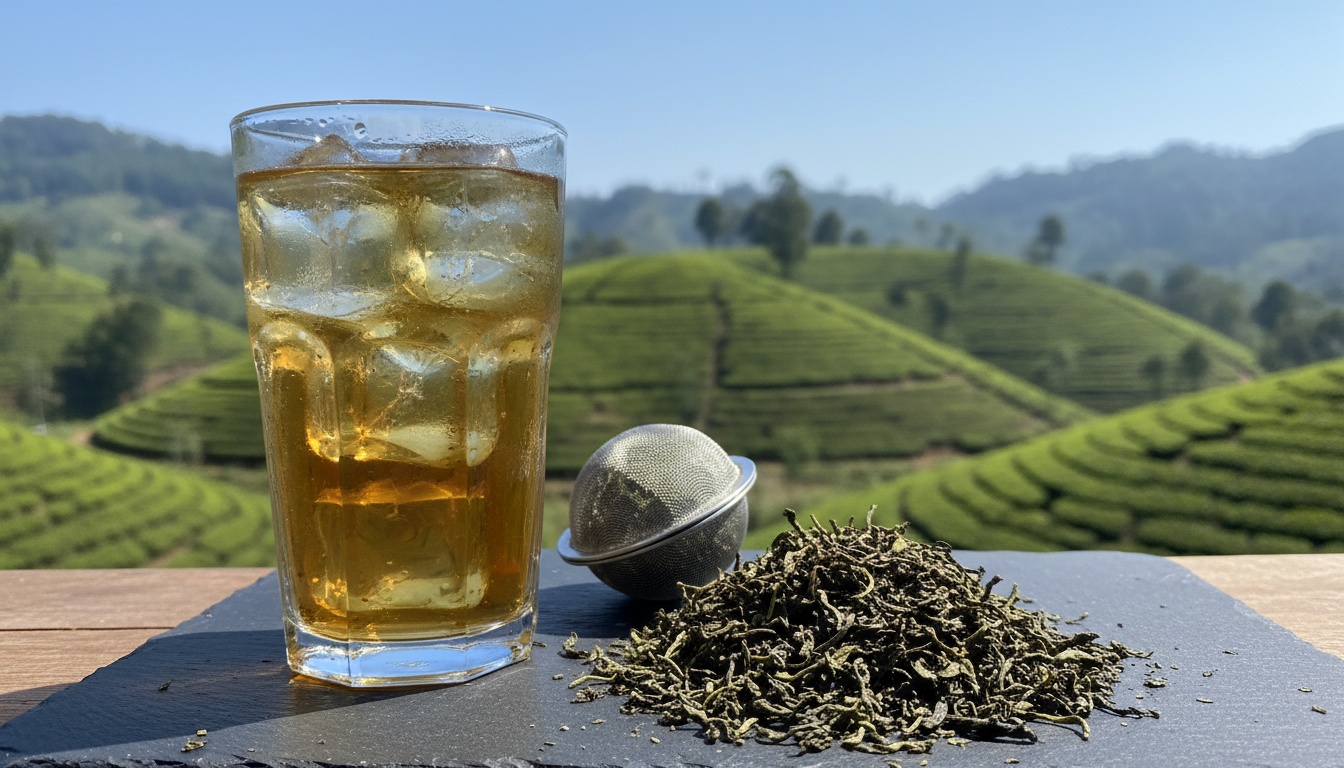
Nilgiri grows at 1,000 to 2,500 metres in the Blue Mountains of Tamil Nadu, and unlike the north-Indian districts it is plucked all year rather than in defined flushes, which makes it a dependable supply line rather than a seasonal one. The cup is fragrant and brisk with a clean, bright character and less astringency than Assam. Its distinguishing commercial property is clarity: Nilgiri stays clear when chilled where many black teas go cloudy, which is why it is the standard base for bottled and brewed iced tea and for ready-to-drink manufacture. Both orthodox and CTC are made, with orthodox graded on the FOP ladder and CTC on BP1, PF1 and dust. A speciality within the district is frost tea, plucked in the cold December-to-February window, which develops an unusually intense aroma and trades at a premium.
Buy Nilgiri where you need a clean, aromatic black tea that behaves predictably: iced tea and RTD manufacture, blending where a bright component is wanted without Assam's weight, flavoured and scented tea bases that need a neutral canvas, and year-round contracts that cannot depend on a single flush. Its all-year plucking is a genuine supply advantage for a packer running continuous production. Where it is not the right buy is any programme selling on dramatic character — Nilgiri is well-made and reliable rather than distinctive, and a speciality customer looking for muscatel or malt will find it unremarkable. That reliability is the point. CBIL brokers Nilgiri orthodox and CTC against estate mark, grade, taster assessment, moisture and ISO 3720 parameters, from the Coonoor and Coimbatore auctions or direct estate contracts, on FOB Cochin and Tuticorin, CFR and CIF terms.
Indicative reference
$2,000–3,800 USD / MT
as at September 2026
Reference level only — not an offer, and reviewed quarterly. Levels shown are as at September 2026. Firm pricing is quoted per RFQ, subject to volume, terms and inspection.
Typical Specification
Specifications are indicative and adjusted to the agreed contract and destination requirements. Final spec confirmed on COA / SGS.
Available Grades
Applications
- Iced tea & RTD manufacture
- Flavoured & scented tea bases
- Bright blending component
- Year-round packer contracts
- Private label
Category
Agri-Foods, Spices & Nuts
Incoterms
FOB · CFR · CIF
Pricing basis
USD / MT
Inspection
SGS / Intertek at load port
Nilgiri Tea — buyer questions
Why is Nilgiri the default iced tea base?
It stays clear when chilled. Many black teas go cloudy as they cool — the tannins and caffeine bind and precipitate — which looks like a fault in a bottle or a glass. Nilgiri's chemistry resists that, so it holds a bright, clean appearance cold. For bottled and brewed iced tea that is a functional requirement, not a preference.
What does year-round plucking mean for my contract?
Supply continuity. Nilgiri has no defined flush season, so a packer running continuous production is not tied to a harvest window or holding stock across a gap. For a year-round private-label contract that predictability is worth real money, and it is the main reason blenders keep Nilgiri on the sheet even when Assam is cheaper.
Is frost tea worth the premium?
For a speciality line, yes. Leaf plucked in the December to February cold develops an unusually intense aroma, and the volume is small enough that it sells as a named seasonal product. For a blend or an RTD base it is money wasted — the character will not survive blending or bottling, and standard Nilgiri does that job.
Orthodox or CTC Nilgiri?
Same choice as anywhere: CTC for teabags and fast strong brewing, orthodox for loose-leaf and where the leaf is seen. Nilgiri makes both well. For iced tea and RTD, CTC and broken orthodox grades are usually preferred because extraction speed matters more than leaf appearance in a factory brew.
Ready to source Nilgiri?
Send your quantity, specification, preferred Incoterms and destination port. We'll verify supply and respond with a workable offer — usually within one business day.
Have Nilgiri to sell? Submit an offer — we'll match it against live buyer demand.
More in Tea
Assam CTC Tea
BP1, PF1, PD & D1 — malty, strong, milk-tea grade
Assam Orthodox Tea
TGFOP & FTGFOP whole leaf — tippy, malty, loose-leaf grade
Darjeeling Tea
First & second flush — muscatel, GI-protected
Kangra Tea
Himachal orthodox & green — GI-protected in India and the EU
Ceylon Tea (Sri Lanka)
High, mid & low grown — OP, BOP & BOPF orthodox
Kenya CTC Tea
Bright coppery BP1 & PF1 from the Mombasa auction
Green Tea
Chunmee, gunpowder & sencha — pan-fired and steamed