
Assam Orthodox Tea
TGFOP & FTGFOP whole leaf — tippy, malty, loose-leaf grade
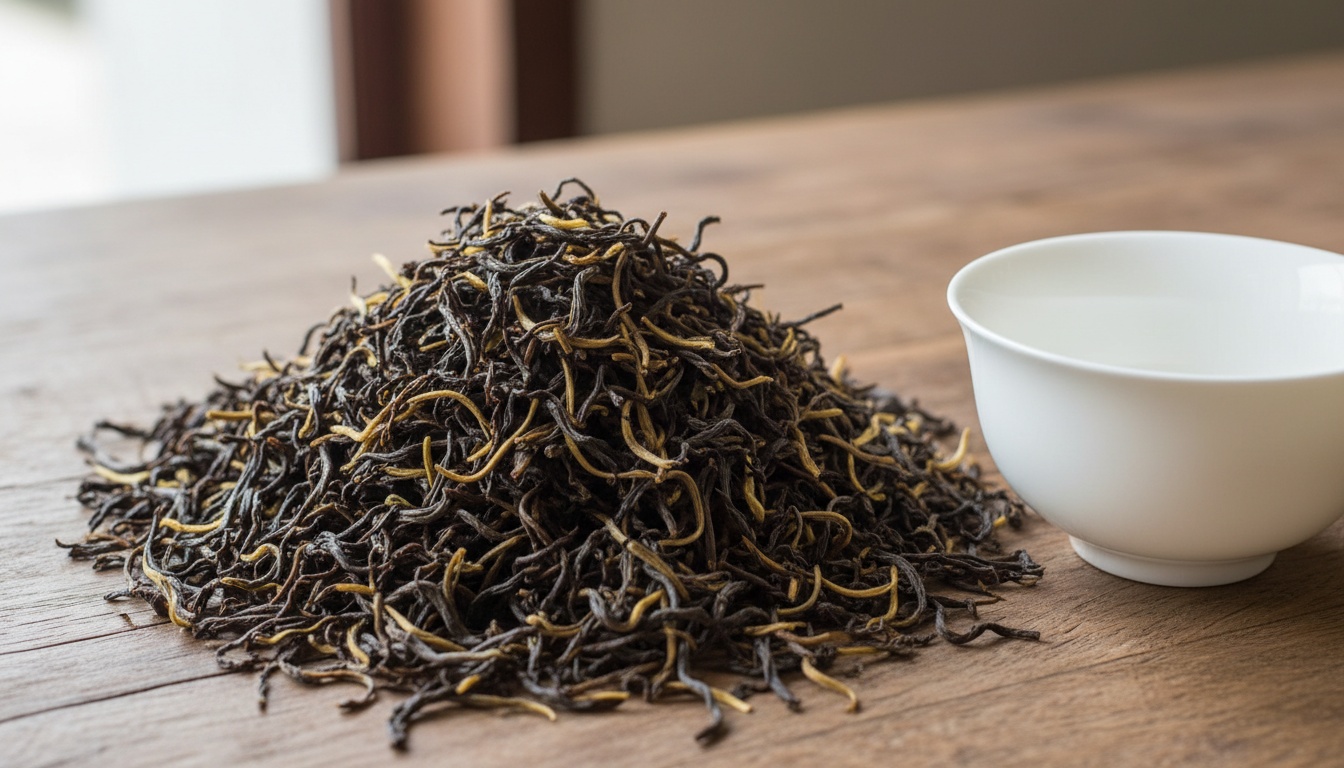
Orthodox manufacture rolls withered leaf gently to bruise rather than shred it, keeping the leaf largely intact and producing a slower, more layered infusion than CTC. Grades read as an acronym ladder describing leaf size and tip content: OP (Orange Pekoe) is whole leaf without much tip, FOP adds tip, GFOP golden tip, TGFOP tippy golden, and FTGFOP finest tippy golden — with a trailing 1 marking the better lot within a grade. Tip, the downy unopened bud, is what those letters are counting, and in Assam it appears as bright golden flecks through a dark leaf. Broken orthodox grades (BOP) and fannings (BOPF) sit below the whole-leaf grades and brew faster. The cup keeps Assam's malt but reads lighter and more aromatic than CTC, with the second flush again the year's benchmark.
Buy orthodox Assam when the leaf will be seen or the cup assessed: loose-leaf retail in caddies and clear packs, premium pyramid teabags where whole leaf is the selling point, speciality and hotel service, and single-estate programmes. It costs substantially more than CTC from the same district, and the honest reason is yield and labour rather than a better plant — orthodox rolling produces less saleable tea per kilo of green leaf and takes longer. That premium buys appearance and nuance. If the tea is going into a paper teabag where nobody sees the leaf and the brew must be strong in ninety seconds, CTC does that job better and cheaper, and paying orthodox money for it is waste. CBIL brokers orthodox Assam against garden mark, grade, tip content, taster assessment, moisture and ISO 3720 parameters, on FOB Kolkata, CFR and CIF terms.
Indicative reference
$3,000–6,000 USD / MT
as at September 2026
Reference level only — not an offer, and reviewed quarterly. Levels shown are as at September 2026. Firm pricing is quoted per RFQ, subject to volume, terms and inspection.
Typical Specification
Specifications are indicative and adjusted to the agreed contract and destination requirements. Final spec confirmed on COA / SGS.
Available Grades
Applications
- Loose-leaf retail
- Premium pyramid teabags
- Speciality & hotel service
- Single-estate programmes
- Breakfast blend component
Category
Agri-Foods, Spices & Nuts
Incoterms
FOB · CFR · CIF
Pricing basis
USD / MT
Inspection
SGS / Intertek at load port
Assam Orthodox Tea — buyer questions
What is all that acronym actually telling me?
Leaf size and tip content. OP is whole leaf, F adds flowery, G golden, T tippy, and the leading F in FTGFOP means finest — so FTGFOP1 is whole leaf with a high proportion of golden tip and is the top of the ladder. Tip is the downy unopened bud. The letters describe appearance and grade, not a cup score, so a taster's assessment still decides whether a lot is worth buying.
Why is orthodox so much dearer than CTC from the same estate?
Yield and labour, not a better bush. Orthodox rolling produces less saleable tea per kilo of green leaf and takes considerably longer, and the finer grades need careful sorting. You are paying for whole leaf appearance and a more layered cup. In a paper teabag where neither is visible, that premium buys nothing.
Does orthodox Assam work in a breakfast blend?
Yes, and it is a common premium move — orthodox Assam brings the malt with more aroma and less bluntness than CTC. The trade-off is brew time: whole leaf takes longer to develop, so a blend built on it needs a longer steep than customers used to a fast teabag may give it. Broken orthodox grades are the usual compromise.
How much tip should I expect at each grade?
It varies by garden and flush rather than following a fixed percentage, which is why buyers assess visually against a sample rather than contracting a number. A TGFOP from a strong second-flush garden can out-tip a nominal FTGFOP from a weaker one. Buy against an approved sample and keep it — tip content is the most common source of dispute in orthodox tea.
Ready to source Assam Orthodox?
Send your quantity, specification, preferred Incoterms and destination port. We'll verify supply and respond with a workable offer — usually within one business day.
Have Assam Orthodox to sell? Submit an offer — we'll match it against live buyer demand.
More in Tea
Assam CTC Tea
BP1, PF1, PD & D1 — malty, strong, milk-tea grade
Darjeeling Tea
First & second flush — muscatel, GI-protected
Kangra Tea
Himachal orthodox & green — GI-protected in India and the EU
Nilgiri Tea
Fragrant South Indian — clear liquor, iced-tea grade
Ceylon Tea (Sri Lanka)
High, mid & low grown — OP, BOP & BOPF orthodox
Kenya CTC Tea
Bright coppery BP1 & PF1 from the Mombasa auction
Green Tea
Chunmee, gunpowder & sencha — pan-fired and steamed