
Green Tea
Chunmee, gunpowder & sencha — pan-fired and steamed
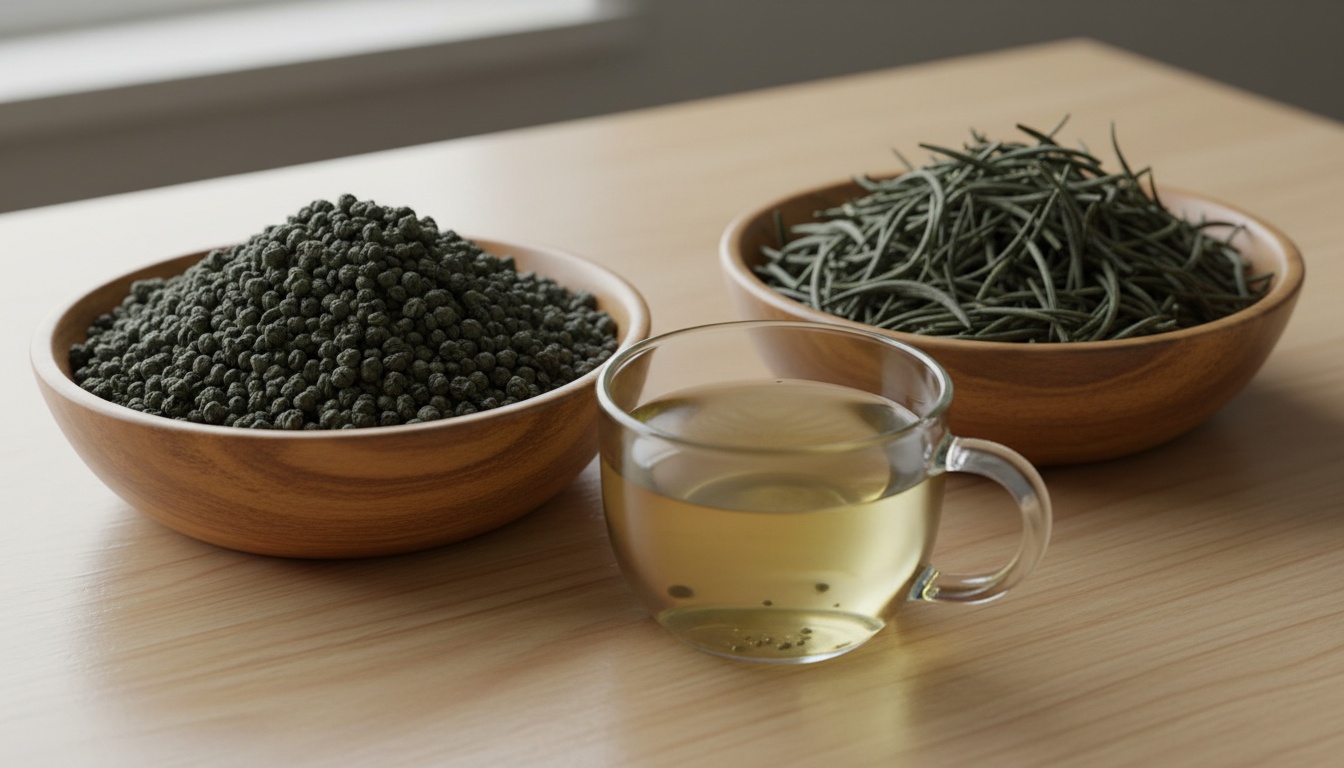
Green tea is the same plant as black tea and differs entirely in processing: the leaf is heat-treated soon after plucking to deactivate the enzymes that would otherwise oxidise it, so the leaf stays green and the cup keeps its vegetal, grassy character. How that heat is applied splits the trade. Chinese and Vietnamese greens are predominantly pan-fired, which gives a toastier, nuttier profile — chunmee, the eyebrow-shaped leaf graded by numbers such as 9371 and 41022, and gunpowder, rolled into tight pellets and graded 3505 and similar. Japanese-style and some Chinese production is steamed instead, which keeps a fresher, more marine and vividly green character, as in sencha. Contracts specify grade number, leaf appearance, liquor colour, moisture at 6.5% maximum and — importantly for green tea — pesticide residue compliance for the destination, which is scrutinised more heavily here than for black tea.
Buy pan-fired Chinese or Vietnamese green for volume: teabag blends, the base for jasmine and flavoured greens, Moroccan-style mint tea where gunpowder is the traditional and expected leaf, and RTD manufacture. Buy steamed styles where a fresher, greener cup is the selling point, typically loose-leaf retail and speciality. Two practical cautions worth heeding. Green tea is more perishable than black — it fades and yellows with air, light and warmth — so packaging, turnover and storage matter more, and old green tea is obvious in the cup. And residue compliance is the most common cause of rejection at EU and Japanese borders, so contract to the destination's MRL list explicitly rather than to a generic standard. CBIL brokers green tea against grade, leaf and liquor assessment, moisture and full residue testing, on FOB Chinese and Vietnamese ports, CFR and CIF terms.
Indicative reference
$2,500–6,000 USD / MT
as at September 2026
Reference level only — not an offer, and reviewed quarterly. Levels shown are as at September 2026. Firm pricing is quoted per RFQ, subject to volume, terms and inspection.
Typical Specification
Specifications are indicative and adjusted to the agreed contract and destination requirements. Final spec confirmed on COA / SGS.
Available Grades
Applications
- Teabag & blended green
- Jasmine & flavoured green bases
- Moroccan mint tea (gunpowder)
- RTD & bottled green tea
- Loose-leaf speciality retail
Category
Agri-Foods, Spices & Nuts
Incoterms
FOB · CFR · CIF
Pricing basis
USD / MT
Inspection
SGS / Intertek at load port
Green Tea — buyer questions
What actually makes tea green rather than black?
Processing, not the plant. Both come from Camellia sinensis. Green tea is heat-treated soon after plucking to deactivate the enzymes that cause oxidation, so the leaf stays green and vegetal; black tea is allowed to oxidise fully. Oolong sits between the two. The bush can supply either — the factory decides which product it becomes.
Pan-fired or steamed?
Pan-firing, the Chinese and Vietnamese norm, gives a toastier, nuttier cup and covers chunmee and gunpowder. Steaming, the Japanese method, keeps a fresher, more marine and vividly green character as in sencha. For volume blending, flavoured bases and Moroccan mint, pan-fired is the standard and cheaper choice. Steamed suits speciality loose-leaf where the fresh green cup is the product.
What do the grade numbers mean?
They are Chinese trade designations for leaf style and quality within a type — chunmee 9371 and 41022, gunpowder 3505 and so on. They describe appearance and make rather than a cup score, and conventions vary between factories, so buy against an approved sample as well as the number. A grade number alone is not a specification.
Why is residue testing more of an issue on green tea?
Because green tea is not oxidised and is often brewed from more of the leaf, residues are scrutinised harder, and EU and Japanese MRL lists are strict and frequently updated. It is the most common cause of consignment rejection in the green tea trade. Contract explicitly to the destination's MRL list, test before shipment, and treat a generic certificate as insufficient.
Ready to source Green Tea?
Send your quantity, specification, preferred Incoterms and destination port. We'll verify supply and respond with a workable offer — usually within one business day.
Have Green Tea to sell? Submit an offer — we'll match it against live buyer demand.
More in Tea
Assam CTC Tea
BP1, PF1, PD & D1 — malty, strong, milk-tea grade
Assam Orthodox Tea
TGFOP & FTGFOP whole leaf — tippy, malty, loose-leaf grade
Darjeeling Tea
First & second flush — muscatel, GI-protected
Kangra Tea
Himachal orthodox & green — GI-protected in India and the EU
Nilgiri Tea
Fragrant South Indian — clear liquor, iced-tea grade
Ceylon Tea (Sri Lanka)
High, mid & low grown — OP, BOP & BOPF orthodox
Kenya CTC Tea
Bright coppery BP1 & PF1 from the Mombasa auction