
Mashrooq Dates
Mid-tier Madinah date — caramel-sweet, sold by count band
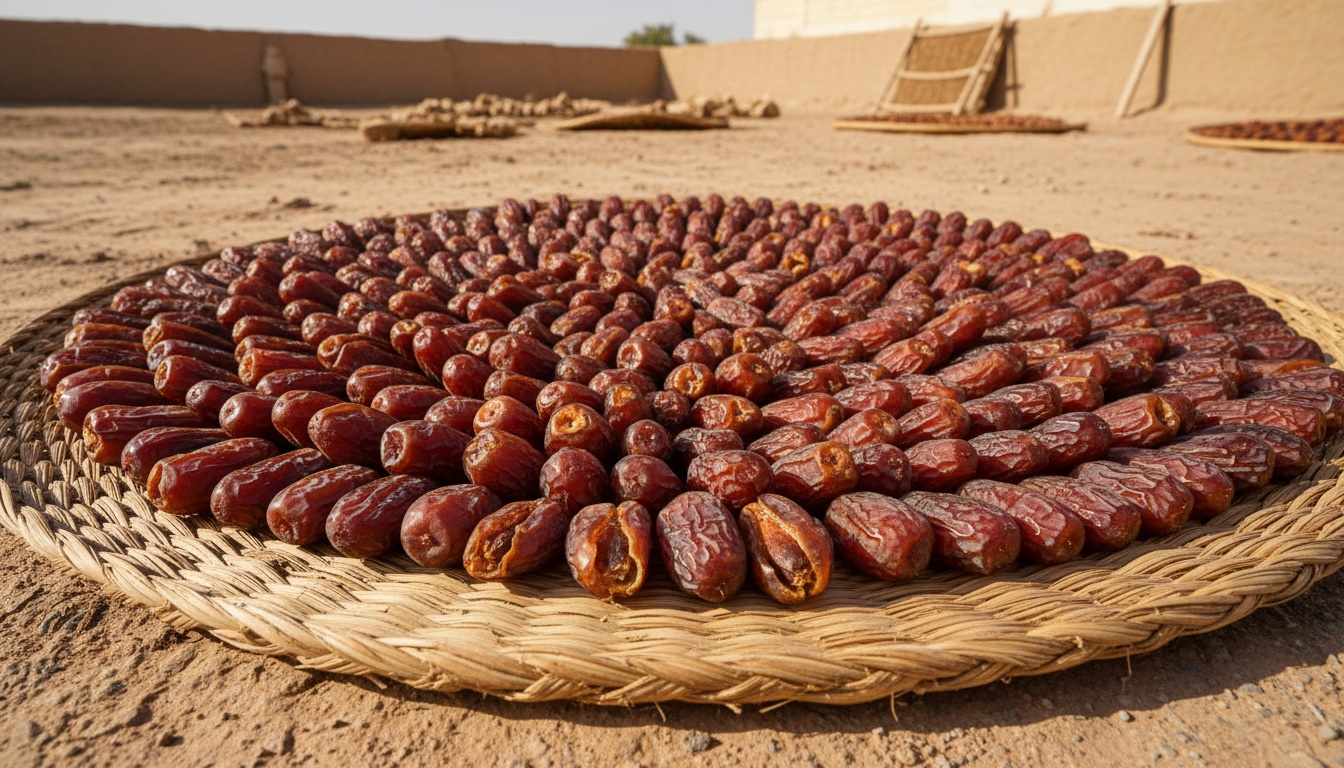
Mashrooq — spelled mashruq or mashrook on some price lists — is a Madinah and Hijaz variety that appears consistently in the middle of the Madinah date-house lists: a slender, elongated fruit, deep brown when cured, with a chewy, semi-dry flesh and a sweetness the trade usually describes as caramel-toned. It is semi-dry in the commercial sense that matters. Cured to roughly 14–18% moisture it is ambient-stable, which shapes its entire cost structure: the fruit ships in a standard container, holds in a cool dry store for around a year, and never obliges the buyer to fund the cold chain a soft date demands. Grading follows the standard Madinah packing-house pattern rather than any variety-specific system — fruit is sorted by size into count-per-kilogram bands, by moisture, and by defect percentage covering splits, loose skin, dark ends and infestation, into premium, first and second carton grades, with pitted lines run for food-service demand. Export lots carry phytosanitary and Halal certification and ship against SGS or Intertek pre-shipment inspection of moisture, count, foreign matter, pest damage and mould. Because varietal literature on Mashrooq is thin compared with Ajwa or Sukkari, the contract has to do the work the name cannot: a properly written Mashrooq contract names the variety, the packing house, the count band and the moisture ceiling, and treats 'premium' as a defined defect tolerance rather than an adjective.
Mashrooq's commercial case is quality-to-price ratio. It is bought by importers who want a genuine Madinah date with real eating quality at mid-tier money: below Safawi, Sagai and Sukkari, comfortably below Mabroom, and a clear step above Khudri volume fruit. That position makes it a natural second or third line in a mixed assortment — the date that fills the box between the Ajwa headline and the value layer — and a sensible standalone line for ethnic retail, food service and hamper packers who need Madinah provenance on the label without headline-variety pricing. Its elongated shape presents well in trays, which sustains steady demand from gift-assortment packers around Ramadan, Hajj and Umrah. The spec discipline is size: 'Mashrooq' on its own commits the packer to nothing, and the difference between a large-count and small-count band is visible the moment the tray is opened, so contract the count per kilogram, not the name. On logistics, ambient shipment is standard and the semi-dry cure is the point — paying reefer rates year-round for Mashrooq is money wasted, though for July and August sailings out of Jeddah a reefer at 10–15°C is worth the margin to arrive without sugar bloom or syruping. Stored below 18°C at moderate humidity the fruit holds for around twelve months. CBIL contracts Mashrooq from Madinah packing houses by named grade with independent inspection at loading, quoted FOB Jeddah, CFR or CIF.
Indicative reference
$1,500–2,400 USD / MT
as at September 2026
Reference level only — not an offer, and reviewed quarterly. Levels shown are as at September 2026. Firm pricing is quoted per RFQ, subject to volume, terms and inspection.
Typical Specification
Specifications are indicative and adjusted to the agreed contract and destination requirements. Final spec confirmed on COA / SGS.
Available Grades
Applications
- Ethnic & diaspora retail
- Mixed-variety gift trays & hampers
- Food service & catering (pitted)
- Ramadan, Hajj & Umrah gifting trade
- Bakery & stuffed-date lines
Category
Agri-Foods, Spices & Nuts
Incoterms
FOB · CFR · CIF
Pricing basis
USD / MT
Inspection
SGS / Intertek at load port
Mashrooq Dates — buyer questions
Is Mashrooq a soft, semi-dry or dry date?
Semi-dry, and that classification is worth money. Cured to roughly 14–18% moisture, Mashrooq is ambient-stable: it ships in a standard container, sits in a cool dry store for around twelve months, and never requires the cold chain that soft varieties depend on. When you compare it against a soft date on landed cost, compare the whole logistics bill, not just the FOB price — the absence of reefer freight and chilled warehousing is part of what you are buying. Confirm the moisture ceiling at loading, because over-moist fruit sold as semi-dry ferments in the container.
How does Mashrooq compare with Safawi and Sukkari on price and quality?
It sits a tier below both on the Madinah lists — genuine Madinah fruit with good eating quality at noticeably less money. Safawi and Sukkari carry name recognition with retail consumers that Mashrooq does not, so if the variety name is going on the front of a consumer pack in a market that knows Saudi dates, the better-known varieties may earn their premium back. If the fruit is going into a mixed tray, a hamper, food service or a value retail line where the label says 'Madinah dates', Mashrooq delivers the same provenance for less.
What should a Mashrooq contract actually specify?
The name alone commits the packer to nothing useful. A workable contract names the variety and the packing house, sets a count-per-kilogram band so you know the size of fruit arriving, a moisture ceiling verified at loading, and a defect tolerance covering splits, loose skin and infestation — with 'premium' defined as numbers rather than left as an adjective. Add pre-shipment inspection by SGS or Intertek, phytosanitary and Halal certification, and a pitted or unpitted declaration. Ten minutes of drafting here removes almost every dispute this product ever generates.
Do I need a reefer container for Mashrooq?
Usually not, and paying for one year-round wastes the main advantage of a semi-dry date. Properly cured Mashrooq travels ambient without difficulty for most of the year. The exception is high summer: on July and August sailings out of Jeddah, container temperatures can push even cured fruit into syruping and sugar bloom, and a reefer set at 10–15°C is cheap insurance on a product that sells partly on appearance. At destination, hold the fruit below 18°C at moderate humidity and it keeps for around twelve months without quality drift.
Ready to source Mashrooq?
Send your quantity, specification, preferred Incoterms and destination port. We'll verify supply and respond with a workable offer — usually within one business day.
Have Mashrooq to sell? Submit an offer — we'll match it against live buyer demand.
More in Saudi Dates
Ajwa Dates
Madinah-only origin — graded by count, skin & provenance
Ajwa Al Aaliya Dates
Named-farm Ajwa from Madinah's Al-Aaliya basalt belt
Anbara (Amber) Dates
Madinah's largest date — graded on count, priced on size
Safawi Dates
Madinah semi-dry, near-black, ambient-stable · FOB Jeddah
Mabroom Dates
Madinah's long date — graded on length, sold on looks
Sagai Dates
Two-tone Najd semi-dry — graded by piece weight & count
Sukkari Dates
Qassim golden Sukkari — soft (rutab) & mufattal, by count
Khalas Dates
Al-Ahsa amber semi-dry, 60–90 count, ambient-stable
Khudri Dates
Semi-dry Saudi volume date — size-graded, year-round FCL
Saudi Medjool Dates
AlUla & Al-Jouf Medjool by calibre and skin grade
Barni Dates
Semi-dry Madinah date — Grade 1/2, Al-Ais provenance
Shalabi Dates
Scarce Madinah variety — lot-certified, part-load supply
Rabia Dates
Madinah value date graded on count, moisture and defects
Stuffed & Chocolate Dates
Stuffed & enrobed OEM lines · 18–20°C chocolate cool chain