
Durum Wheat
Pasta grade, 13% protein, vitreous kernels 75%+
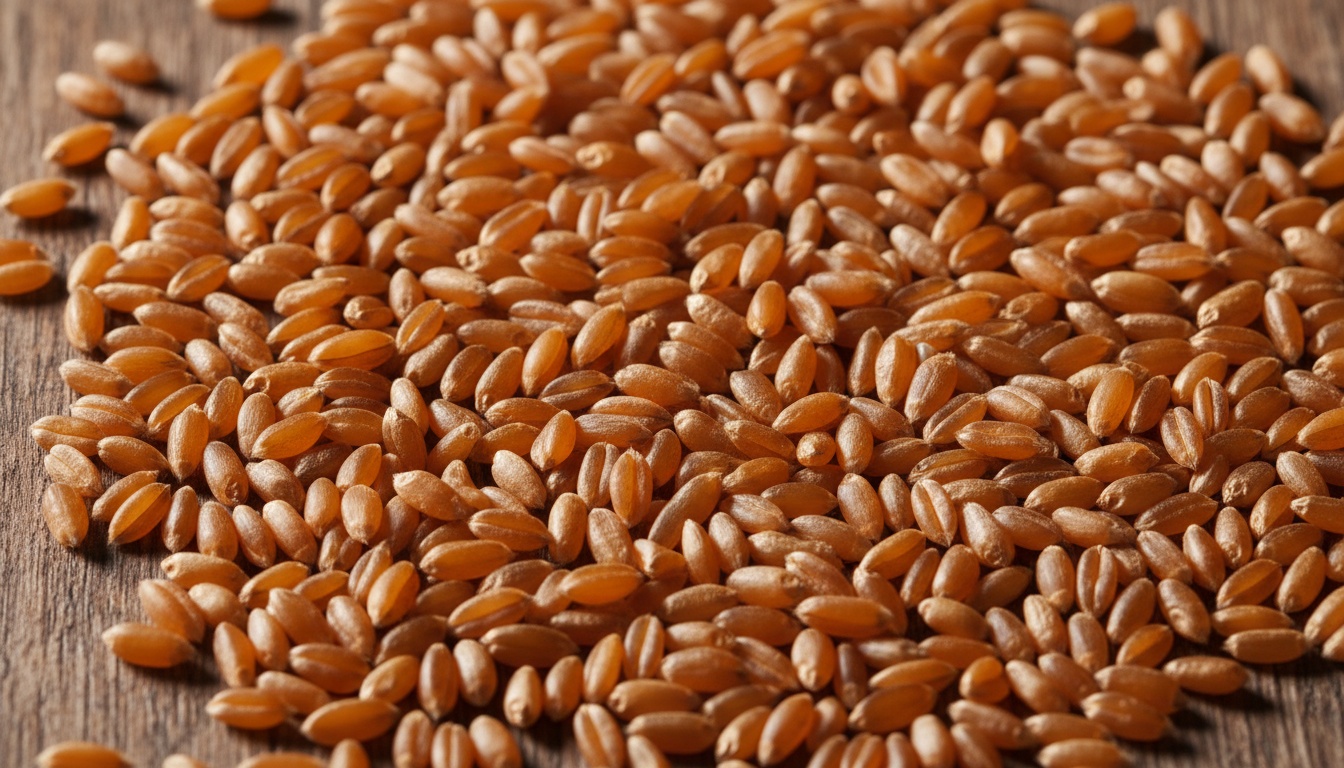
Durum is a different species from bread wheat and behaves like a different commodity. Triticum durum is the hardest wheat grown, and it is milled into semolina rather than flour — coarse, golden particles that give pasta its bite and its resistance to overcooking. The specification that governs value is the proportion of hard vitreous amber kernels, or HVAC, contracted at 75% minimum and often 80% for premium pasta grists. A kernel that has gone starchy rather than vitreous — visible as a chalky yellow-belly — mills into flour rather than semolina and drags down the semolina yield the mill is paying for. Protein at 13% minimum builds the gluten network that stops extruded pasta disintegrating in the pot, and yellow pigment measured as beta-carotene gives the finished product its colour, which is a genuine commercial attribute rather than a cosmetic one.
Supply is far narrower than bread wheat and prices are correspondingly more volatile. Canadian Western Amber Durum sets the global quality benchmark; Italian, French and Kazakh durum serve regional pasta industries; Australian durum runs into Asian and Middle Eastern mills. Because the growing area is small and concentrated, a drought in one origin moves the world price in a way that never happens in milling wheat — durum can trade at a very substantial premium to bread wheat and occasionally at a multiple of it. Buyers are pasta manufacturers, couscous and bulgur producers, and semolina mills. CBIL brokers durum on GAFTA terms with certification of protein, vitreous kernel count, mottling, moisture and test weight at load port. Tell us your semolina yield requirement and your minimum HVAC — those two numbers determine which origins can serve you at all.
Indicative reference
$380–490 USD / MT
as at September 2026
Reference level only — not an offer, and reviewed quarterly. Levels shown are as at September 2026. Firm pricing is quoted per RFQ, subject to volume, terms and inspection.
Typical Specification
Specifications are indicative and adjusted to the agreed contract and destination requirements. Final spec confirmed on COA / SGS.
Available Grades
Applications
- Semolina milling
- Dry pasta manufacture
- Couscous production
- Bulgur & frik
- Premium bakery & speciality breads
Category
Agriculture & Fertilizers
Incoterms
FOB · CFR · CIF
Pricing basis
USD / MT
Inspection
SGS / Intertek at load port
Durum Wheat — buyer questions
What are vitreous kernels and why is the percentage contracted?
A vitreous kernel is glassy and translucent right through, which is what mills into coarse golden semolina. A kernel that has gone starchy — chalky and opaque, often called yellow-belly — mills into fine flour instead, which is not what a pasta line wants. The HVAC percentage is therefore a direct proxy for semolina yield, and it is the single number that separates a premium durum parcel from an ordinary one.
Can I substitute bread wheat for durum in pasta?
Not without changing the product. Common wheat semolina makes softer pasta that loses structure in boiling water, which is why many jurisdictions require dry pasta to be 100% durum and label it accordingly. Durum's hardness, protein quality and yellow pigment are what give pasta its bite and colour. Blending is done in some markets, but it is a different product sold at a different price.
Why is durum so much more expensive than milling wheat, and why does the gap swing?
The growing area is small and geographically concentrated compared with bread wheat, so supply is inelastic. A dry year in Canada or a poor Mediterranean crop removes a meaningful share of world supply with no substitute available, and the premium over bread wheat can widen dramatically. That volatility is structural, not a market failure — plan procurement around it rather than expecting a stable differential.
Does durum need a falling number too?
Yes, and we specify it higher than for bread wheat at 300 seconds. Sprout damage in durum damages both the semolina and the finished pasta's cooking behaviour, and because durum carries a large price premium the cost of getting it wrong is proportionally greater. It goes on the certificate alongside protein and vitreous count.
Ready to source Durum Wheat?
Send your quantity, specification, preferred Incoterms and destination port. We'll verify supply and respond with a workable offer — usually within one business day.
Have Durum Wheat to sell? Submit an offer — we'll match it against live buyer demand.