
Pigeon Peas (Toor / Arhar)
Whole toor & toor dal from Myanmar and Tanzania
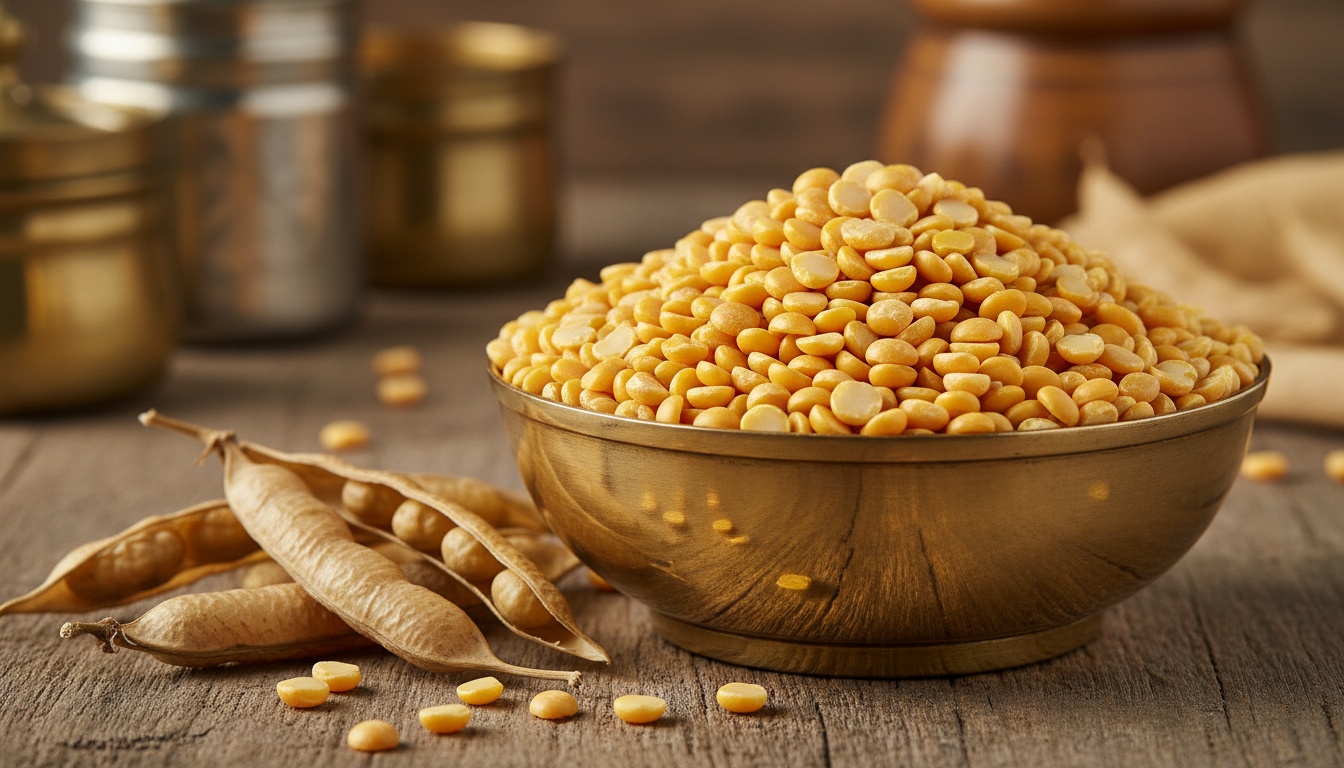
Pigeon peas trade under three names that all mean the same seed — toor, arhar and red gram — and the first commercial fork is whole versus split. Whole toor is bought by dal mills that want to run their own dehulling and splitting and capture the milling margin; toor dal is the split, skinless yellow cotyledon that retail packers, ready-meal producers and food-service buyers take because the milling is already done. Within toor dal there is a second fork buyers must name: plain (unpolished) versus oil-treated, where a light coat of edible oil is applied to improve gloss and shelf appearance. Some destinations and food-safety programmes will not accept oil-treated material at all, so this is a specification to settle before quoting rather than after loading.
Origin genuinely concentrates here in a way it does not for chickpeas or lentils. Myanmar is the dominant exporter of whole toor, with Tanzania, Mozambique and Malawi supplying the African crop, and Indian demand sets the world price — Indian import policy on toor can reprice the whole lane inside a week, which is why forward cover matters more on this line than on most. Buyers choose pigeon peas over lentils precisely because toor dal holds a fuller body and a distinct nutty flavour and does not collapse the way red split lentils do. Lots ship against SGS or Intertek certification of purity, moisture, foreign matter, broken and damaged seed, weevil and insect damage, oil-treatment status and crop year, with phytosanitary and fumigation documentation. CBIL arranges 25kg and 50kg PP bags and 1 MT jumbo bags, container-load, on FOB, CFR and CIF terms.
Indicative reference
$760–1,080 USD / MT
as at September 2026
Reference level only — not an offer, and reviewed quarterly. Levels shown are as at September 2026. Firm pricing is quoted per RFQ, subject to volume, terms and inspection.
Typical Specification
Specifications are indicative and adjusted to the agreed contract and destination requirements. Final spec confirmed on COA / SGS.
Available Grades
Applications
- Dal milling
- Retail packing
- Ready-meal & sambar manufacture
- Food-service & catering
- Institutional supply
Category
Agri-Foods, Spices & Nuts
Incoterms
FOB · CFR · CIF
Pricing basis
USD / MT
Inspection
SGS / Intertek at load port
Pigeon Peas (Toor / Arhar) — buyer questions
Should I buy whole pigeon peas or toor dal?
It depends on whether you mill. Dal mills buy whole toor because dehulling and splitting in-house is where their margin sits. Retail packers, ready-meal producers and food-service buyers take toor dal already split and skinless, because paying for milling once at origin is cheaper than building it. If you do not have a mill, whole toor is not a saving.
What is oil-treated toor dal and do I want it?
A light coat of edible oil applied to the split dal to improve gloss and shelf appearance. It is standard in some South Asian retail channels and unacceptable in others — several destinations and food-safety programmes reject it outright. Name plain or oil-treated in your enquiry; it is not a detail to leave to the shipper's default.
Why is pigeon pea pricing so volatile?
Indian demand sets the world price and Indian import policy on toor can shift with little notice, which reprices Myanmar and East African material inside days rather than months. If you have predictable annual volume, forward cover on this line is worth more than it is on lentils or chickpeas, where supply is broader and policy risk is lower.
Where does the crop actually come from?
Myanmar dominates whole toor exports, with Tanzania, Mozambique and Malawi supplying the African crop and India both growing and importing heavily. Origin is not interchangeable on quality here — grain size, colour and milling yield differ between Myanmar and East African lots, so we quote origin explicitly rather than offering generic toor.
Ready to source Pigeon Peas?
Send your quantity, specification, preferred Incoterms and destination port. We'll verify supply and respond with a workable offer — usually within one business day.
Have Pigeon Peas to sell? Submit an offer — we'll match it against live buyer demand.
More in Pulses & Grains
Chickpeas
Kabuli by calibre in mm & Desi by count
Lentils
Red & green, whole and split, Laird to Eston
Mung Beans
Green gram by seed size, shine & sprouting grade
Kidney Beans (Rajma)
Light red, dark red & Rajma Chitra speckled
Millets
Pearl, foxtail, finger & the minor millets
Sorghum
White food-grade & red feed-grade jowar