
Kidney Beans (Rajma)
Light red, dark red & Rajma Chitra speckled
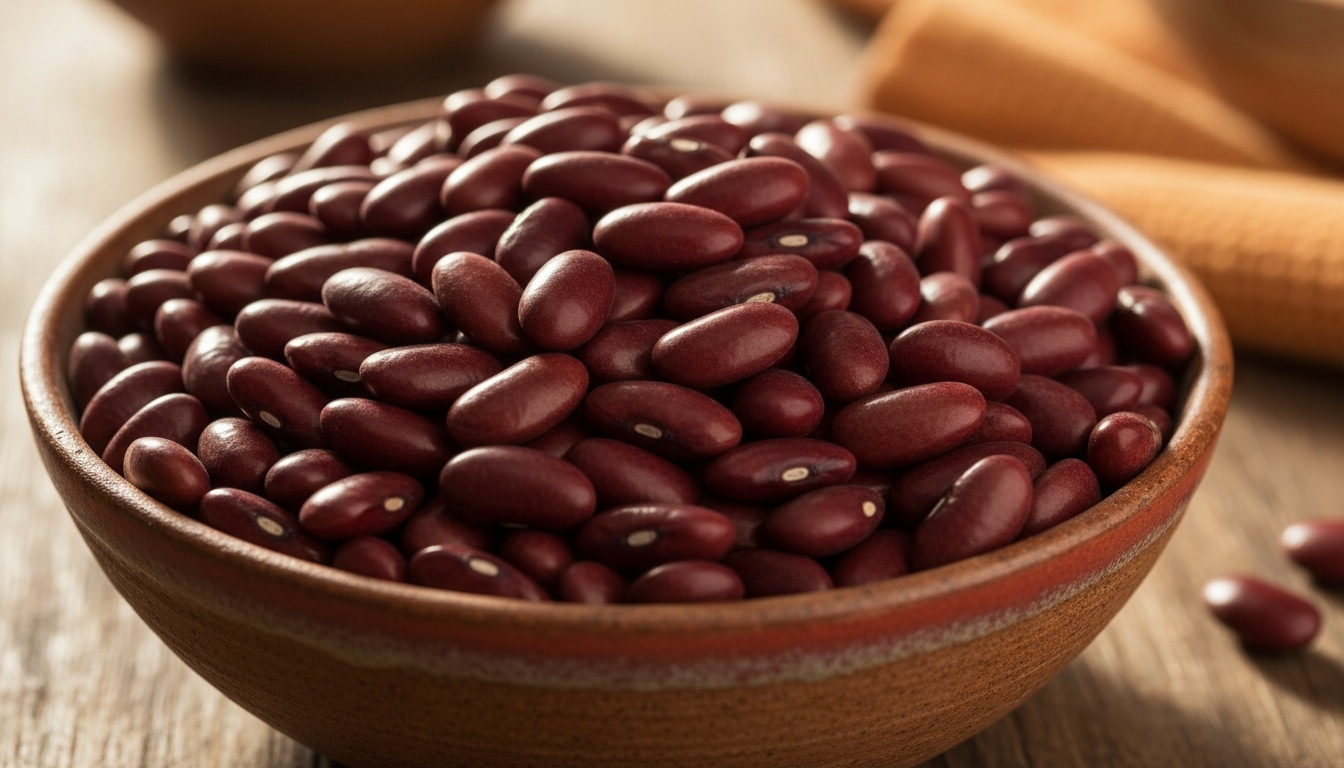
Kidney beans split into commercially distinct types that are not substitutes for one another. Dark red kidney beans hold their deep colour and skin integrity through retorting, which is why canners and chilli producers specify them and pay for them. Light red kidney beans are milder in colour and slightly softer, favoured across parts of the Caribbean and Latin American trade. Rajma Chitra — the speckled, mottled red-and-cream bean from the Indian and Nepalese hills — is a different proposition again: smaller, thinner-skinned, faster-cooking and creamier, and North Indian retail and food-service buyers will not accept a plain dark red in its place. White kidney beans (cannellini / alubia) round out the line for Mediterranean and soup applications. Grading is by count per 100g, typically 90–130 depending on type and calibre, and bolder counts price up.
The deciding variable for most industrial buyers is not colour but skin integrity through the retort. A bean that splits or sloughs its skin in the can is a rejected batch regardless of how it looked in the bag, so we specify against damaged and split percentages tightly and against crop year, since older beans harden and lengthen soak and cook times — the same hard-seed problem that quietly wrecks canner yields. Lots are machine-cleaned, gravity-separated, Sortex colour-sorted and destoned, certified by SGS or Intertek for count, purity, moisture, foreign matter, split and damaged seed, discoloured beans and crop year, with phytosanitary and fumigation documentation. CBIL arranges 25kg and 50kg PP bags and 1 MT jumbo bags, container-load, on FOB, CFR and CIF terms.
Indicative reference
$780–1,150 USD / MT
as at September 2026
Reference level only — not an offer, and reviewed quarterly. Levels shown are as at September 2026. Firm pricing is quoted per RFQ, subject to volume, terms and inspection.
Typical Specification
Specifications are indicative and adjusted to the agreed contract and destination requirements. Final spec confirmed on COA / SGS.
Available Grades
Applications
- Canning
- Retail packing
- Chilli & ready-meal manufacture
- Food-service & catering
- Institutional supply
Category
Agri-Foods, Spices & Nuts
Incoterms
FOB · CFR · CIF
Pricing basis
USD / MT
Inspection
SGS / Intertek at load port
Kidney Beans (Rajma) — buyer questions
Dark red or light red kidney beans — does it matter?
Yes. Dark red holds its colour and skin through retorting, which is why canners and chilli producers specify it. Light red is milder in colour, slightly softer, and is the traditional pick across much of the Caribbean and Latin American trade. Substituting one for the other is visible in the finished product, so it is not a swap to make on price alone.
Can I use dark red kidney beans instead of Rajma Chitra?
Not for a North Indian retail or food-service buyer. Chitra is the speckled hill bean — smaller, thinner-skinned, faster-cooking and creamier — and the eating quality is genuinely different. Customers who buy rajma know the difference on sight and on the plate. If the recipe says Chitra, quote Chitra.
What should a canner specify beyond type?
Skin integrity and crop year. A bean that splits or sloughs its skin in the retort is a lost batch no matter how it looked in the bag, so tie the contract to tight split and damaged-seed percentages. And insist on current crop — older beans develop hard seed, which lengthens soak and cook times and quietly destroys your drained-weight yield.
Ready to source Kidney Beans?
Send your quantity, specification, preferred Incoterms and destination port. We'll verify supply and respond with a workable offer — usually within one business day.
Have Kidney Beans to sell? Submit an offer — we'll match it against live buyer demand.
More in Pulses & Grains
Chickpeas
Kabuli by calibre in mm & Desi by count
Lentils
Red & green, whole and split, Laird to Eston
Pigeon Peas (Toor / Arhar)
Whole toor & toor dal from Myanmar and Tanzania
Mung Beans
Green gram by seed size, shine & sprouting grade
Millets
Pearl, foxtail, finger & the minor millets
Sorghum
White food-grade & red feed-grade jowar