
Vietnam Robusta
Grade 1 scr 18 & Grade 2 scr 13, 5% black & broken
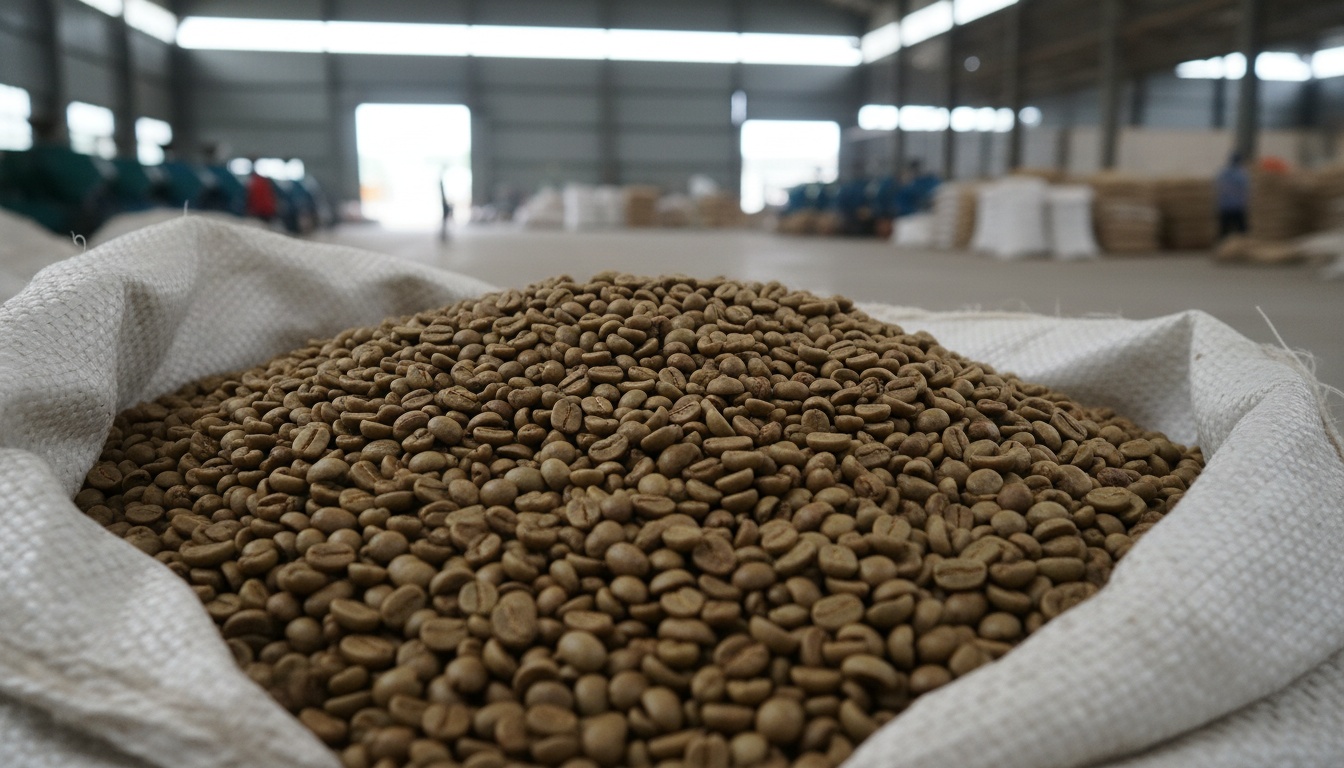
Vietnam is the largest robusta producer in the world and its Dak Lak and Central Highlands crop sets the physical reference for the ICE London contract. The trade grades it plainly: Grade 1 at screen 18 with tight defect limits, Grade 2 at screen 13 or 16 permitting 5% black and broken beans, moisture at 12.5% maximum, foreign matter at 0.5% or less. Almost all of it is natural-processed — dried in the cherry on patios — which suits robusta's heavier, woody, more bitter profile rather than fighting it. Robusta carries roughly twice the caffeine of arabica and substantially more chlorogenic acid, which is precisely why it does two jobs arabica cannot: it produces dense, persistent crema in espresso, and it delivers soluble yield in instant manufacture at a fraction of arabica's cost.
Buy Vietnamese robusta for exactly those jobs — soluble and instant production, espresso blends needing crema and body, ready-to-drink and coffee-flavoured manufacture, and any programme where cost per kilo of extractable solids is the deciding metric. It is emphatically not a substitute for arabica in a filter or single-origin cup; the flavour is woody and rubbery by comparison and no amount of careful roasting makes it delicate. Grade 2 at 5% black and broken is the commercial volume standard and perfectly sound for soluble; step up to Grade 1 screen 18 where the beans are roasted and ground visibly, or where an espresso blend needs cleaner robusta character. Prices reference ICE London in USD per tonne rather than the arabica "C" in cents per pound, so quotes are not directly comparable between the two species. CBIL brokers Vietnamese robusta against verification of screen, black and broken percentage, moisture and foreign matter, on FOB Ho Chi Minh City, CFR and CIF terms.
Indicative reference
$4,800–6,400 USD / MT
as at September 2026
Reference level only — not an offer, and reviewed quarterly. Levels shown are as at September 2026. Firm pricing is quoted per RFQ, subject to volume, terms and inspection.
Typical Specification
Specifications are indicative and adjusted to the agreed contract and destination requirements. Final spec confirmed on COA / SGS.
Available Grades
Applications
- Instant & soluble manufacture
- Espresso blends for crema & body
- Ready-to-drink coffee
- Coffee-flavoured food manufacture
- Volume commercial blending
Category
Agri-Foods, Spices & Nuts
Incoterms
FOB · CFR · CIF
Pricing basis
USD / MT
Inspection
SGS / Intertek at load port
Vietnam Robusta — buyer questions
Can robusta substitute for arabica to cut cost?
In some applications, not in others. For soluble manufacture, ready-to-drink and espresso blends wanting crema and body, robusta is the correct input and cheaper. For filter coffee or a single-origin retail bag, it is not a substitute at any price — the cup is woody and bitter next to arabica and the customer will taste it immediately. Substitute by application, never purely by price.
What does 5% black and broken actually permit?
Up to 5% by weight of black beans and broken fragments in the lot, which is the standard commercial Grade 2 tolerance and entirely normal for soluble production where the coffee is extracted rather than appreciated. If the beans are roasted and ground visibly, or the blend is sold on quality, move to Grade 1 screen 18 with tighter limits.
Why is robusta priced in USD per tonne and arabica in cents per pound?
Different exchanges and conventions: robusta references ICE London in USD/MT, arabica the ICE "C" in US cents per pound. It means robusta and arabica quotes are not directly comparable without converting, and it is a common source of confusion when a buyer compares offers across species. Convert both to the same basis before deciding anything.
Does processing matter for robusta?
Less than for arabica, and that is a cost advantage. Nearly all Vietnamese robusta is natural-processed on patios, which suits the bean and avoids the cost of washing infrastructure. Washed and polished robusta exists and cups cleaner, commanding a premium for espresso blends where robusta character needs to be less obtrusive, but for soluble it is money spent on nothing.
Ready to source Vietnam Robusta?
Send your quantity, specification, preferred Incoterms and destination port. We'll verify supply and respond with a workable offer — usually within one business day.
Have Vietnam Robusta to sell? Submit an offer — we'll match it against live buyer demand.
More in Green Coffee Beans
Brazil Arabica (Santos)
Santos NY 2/3, screen 17/18, natural & pulped natural
Colombia Arabica (Supremo & Excelso)
Supremo scr 17/18 & Excelso scr 14/16, fully washed
Ethiopia Arabica
Yirgacheffe, Sidamo & Guji — G1/G2, washed & natural
Uganda Robusta
Screen 18 natural robusta — cleaner cup than Asian origin
Central America Arabica (SHG / SHB)
Honduras, Guatemala & Nicaragua — SHG/SHB, EP washed
India Coffee (Plantation & Monsooned)
Plantation A, Cherry AB & Monsooned Malabar