
Indonesian & Asian Cocoa Beans
Sulawesi & PNG — high fat, hard butter, press grade
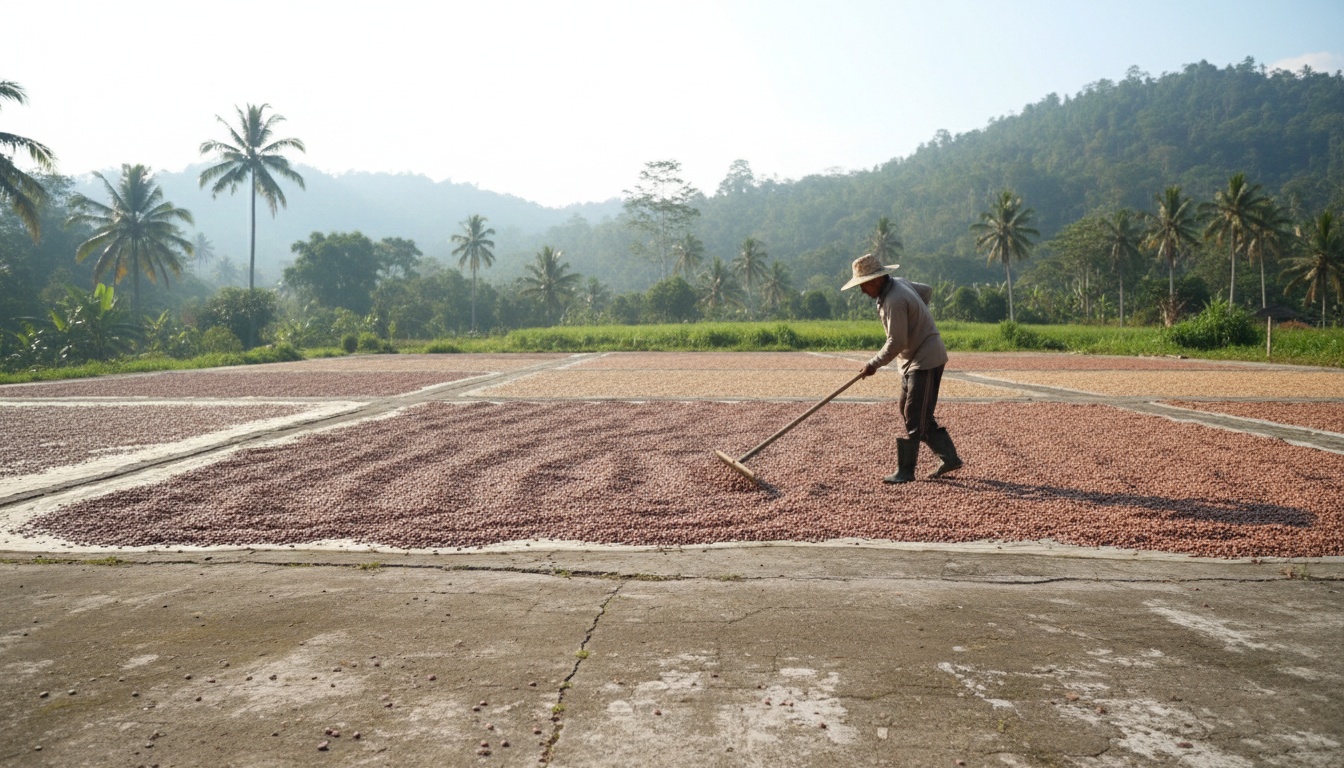
Indonesia is among the largest cocoa producers in the world, concentrated in Sulawesi, alongside meaningful volumes from Papua New Guinea and Malaysia. The commercially distinctive property of Asian-origin beans is fat: they run at the upper end of the 50 to 57% range and produce a butter with a harder consistency and higher melting point than West African material, which matters to a manufacturer making chocolate for warm climates where bloom and softening are real problems. The trade-off is fermentation. A substantial share of Indonesian cocoa is lightly fermented or unfermented, which shows immediately in the cut test as a high slaty count and produces a flat, acidic flavour profile. That is why much of the crop is bought specifically for pressing rather than for flavour, where fat yield matters and the bean's own character is largely irrelevant.
Buy Indonesian and PNG beans when you are pressing for butter yield, when you need harder butter for a heat-stable product, or when a cost-led blend can carry a proportion of lower-flavour bean alongside better-fermented material. Do not buy them for a flavour-led chocolate or a single-origin bar without first checking the fermentation — an unfermented lot will taste harsh and sour and no roasting profile will rescue it. Papua New Guinean cocoa deserves a separate note: it is generally better fermented than Indonesian and some of it is genuinely fine flavour, though a proportion carries a smoky character from wood-fired drying that buyers either want or emphatically do not. Ask, and taste, before contracting. CBIL brokers Indonesian, PNG and Malaysian beans against cut test, fat content, bean count, moisture and FFA, on FOB Makassar, Surabaya and Lae, CFR and CIF terms.
Indicative reference
$5,800–8,500 USD / MT
as at September 2026
Reference level only — not an offer, and reviewed quarterly. Levels shown are as at September 2026. Firm pricing is quoted per RFQ, subject to volume, terms and inspection.
Typical Specification
Specifications are indicative and adjusted to the agreed contract and destination requirements. Final spec confirmed on COA / SGS.
Available Grades
Applications
- Pressing for butter yield
- Heat-stable chocolate
- Compound coatings
- Cost-led blend component
- Industrial grinding
Category
Agri-Foods, Spices & Nuts
Incoterms
FOB · CFR · CIF
Pricing basis
USD / MT
Inspection
SGS / Intertek at load port
Indonesian & Asian Cocoa Beans — buyer questions
Why do grinders favour Asian beans?
Fat yield and butter hardness. Indonesian and PNG beans sit at the upper end of the fat range and press a butter with a higher melting point than West African material. For a manufacturer making chocolate that must survive a warm climate without blooming or softening, that hardness is a functional property worth paying for, and the bean's own flavour matters little once it is pressed.
What is the catch on Indonesian cocoa?
Fermentation, and it is a real one. A substantial share of the crop is lightly fermented or unfermented, which shows in the cut test as a high slaty count and tastes flat and acidic. For pressing that is largely irrelevant. For a flavour-led chocolate it is fatal, and no roasting profile will fix it. Always see the cut test before contracting from this origin.
Is PNG cocoa different from Indonesian?
Generally better fermented, and some of it is genuinely fine flavour rather than press grade. The complication is drying: a proportion of PNG cocoa is dried over wood fires and carries a distinct smoky character. Some buyers specifically want it, others reject it outright. It is not a defect, but it is not neutral either — taste a sample before committing.
Can I blend Asian beans with West African?
Yes, and grinders do it routinely to balance fat yield against flavour and cost. The blend ratio depends on what you are making: a compound coating or an industrial press run tolerates a high Asian proportion, while a flavour-led chocolate needs the well-fermented material to dominate. Tell us the end product and we will propose a workable ratio.
Ready to source Indonesia Beans?
Send your quantity, specification, preferred Incoterms and destination port. We'll verify supply and respond with a workable offer — usually within one business day.
Have Indonesia Beans to sell? Submit an offer — we'll match it against live buyer demand.
More in Cocoa
West African Cocoa Beans
Côte d'Ivoire & Ghana — Good Fermented, main crop
Fine Flavour Cocoa Beans
Criollo, Trinitario & Nacional — Ecuador, Peru, Caribbean
Cocoa Butter
Natural & deodorised — pressed, prime pressed & refined
Cocoa Powder
Natural & alkalised — 10-12% and 20-22% fat
Cocoa Liquor (Mass)
Ground roasted nib — 50-57% fat, natural & alkalised
Cocoa Nibs
Roasted & raw winnowed nib — inclusion & snack grade