
Cocoa Powder
Natural & alkalised — 10-12% and 20-22% fat
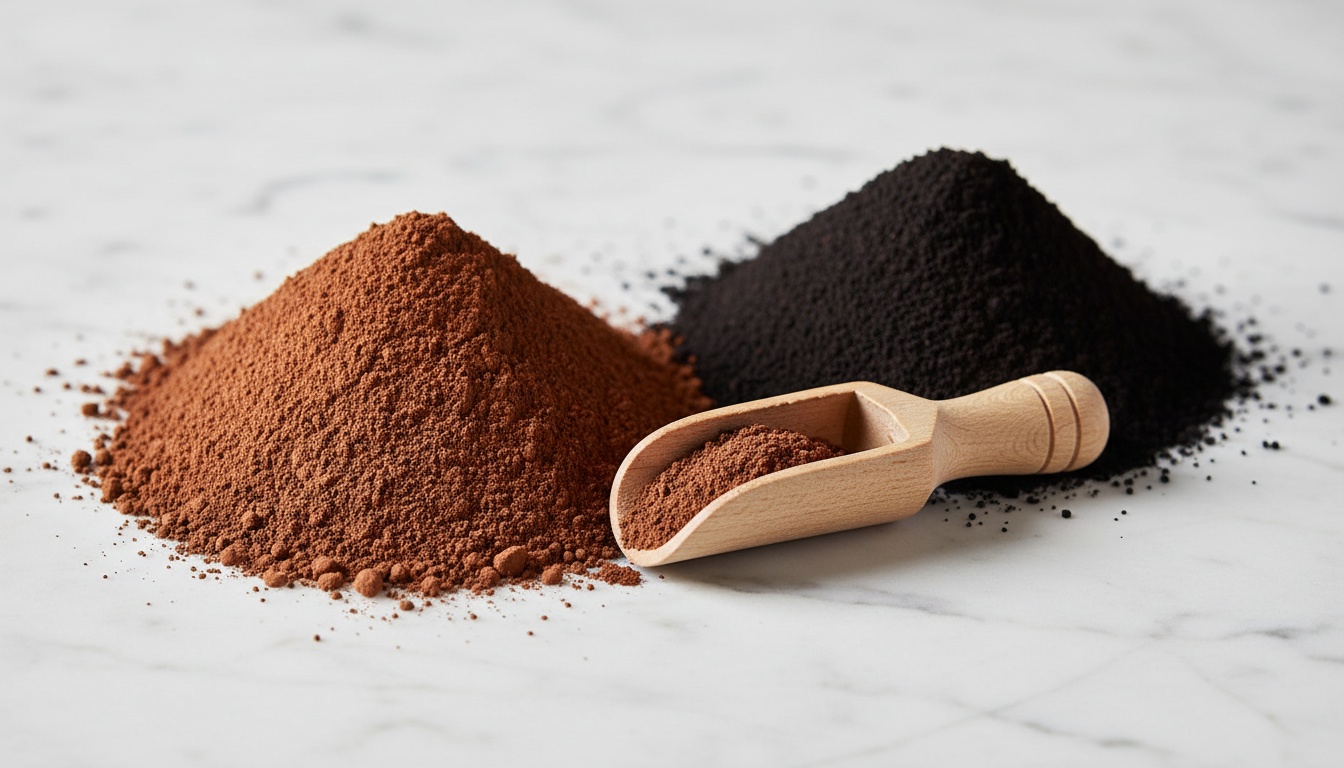
Cocoa powder is what remains after the butter is pressed out of liquor, milled to a fine powder, and it divides on one processing decision that changes almost everything about how it behaves. Natural powder is untreated, acidic at pH 5.3 to 5.8, lighter reddish-brown, and fruitier and sharper in flavour — and because it is acidic it reacts with baking soda, which is why traditional American baking recipes pair the two. Alkalised or Dutch-processed powder has been treated with an alkali to raise pH to roughly 6.8 to 8.1, which darkens the colour from deep brown through to near-black, mellows the flavour, and greatly improves dispersion in milk and water. That dispersion is why drinking chocolate, dairy and beverage manufacture almost always specify alkalised. Fat content is the other axis: 10 to 12% is the standard grade, 20 to 22% high fat for richer applications, and defatted powders below 1% exist for specific formulations.
Match the powder to the process, not to price. Alkalised for beverages, ice cream, dairy, and any application where colour depth and clean dispersion matter; natural for baking where it must react with soda, and where a fruitier, sharper cocoa note is wanted. High-fat powder for premium ice cream and coatings where mouthfeel matters; standard fat for volume bakery and beverage. The market dynamic to keep in view is the ratio against butter — a grinder produces both from the same liquor, so powder is cheap when butter demand is strong and dear when it is not, and powder buyers who track only their own price are consistently surprised. CBIL brokers cocoa powder against fat content, pH, colour, fineness, moisture and microbiology, in 25 kg multiwall bags, on FOB and CIF terms.
Indicative reference
$3,500–7,000 USD / MT
as at September 2026
Reference level only — not an offer, and reviewed quarterly. Levels shown are as at September 2026. Firm pricing is quoted per RFQ, subject to volume, terms and inspection.
Typical Specification
Specifications are indicative and adjusted to the agreed contract and destination requirements. Final spec confirmed on COA / SGS.
Available Grades
Applications
- Bakery & biscuits
- Drinking chocolate & beverage
- Ice cream & dairy
- Confectionery coatings
- Nutrition & protein blends
Category
Agri-Foods, Spices & Nuts
Incoterms
FOB · CFR · CIF
Pricing basis
USD / MT
Inspection
SGS / Intertek at load port
Cocoa Powder — buyer questions
Natural or alkalised — how do I choose?
By the process, not the price. Alkalised is darker, mellower and disperses cleanly in liquid, which is why beverages, dairy and ice cream specify it. Natural is acidic at pH 5.3 to 5.8 and reacts with baking soda, which is why traditional baking recipes call for it — substitute alkalised there and the leavening fails. They are not interchangeable in a formulation.
When is high-fat powder worth it?
Where mouthfeel and richness carry the product: premium ice cream, ganache, coatings and drinking chocolate. At 20 to 22% fat against the standard 10 to 12%, it costs more and delivers a rounder texture. For volume bakery, where the powder is one ingredient among many and the fat is invisible, standard grade does the same job for less.
Why is powder sometimes cheap when cocoa beans are expensive?
The butter-powder ratio. A grinder presses liquor into butter and powder together, so when butter demand is strong the powder that comes with it floods the market and cheapens, even with beans at record levels. Powder buyers who watch only bean prices misread this constantly. Track the butter ratio alongside your own market.
What does heavy alkalisation do?
Pushes colour toward black and flavour toward mild and earthy — the powder behind very dark biscuits and cookies. It also raises pH further, which affects how the powder interacts with other ingredients. It is a deliberate product choice for appearance rather than a quality upgrade, and it does mute the cocoa character, so specify it only when you want the colour.
Ready to source Cocoa Powder?
Send your quantity, specification, preferred Incoterms and destination port. We'll verify supply and respond with a workable offer — usually within one business day.
Have Cocoa Powder to sell? Submit an offer — we'll match it against live buyer demand.
More in Cocoa
West African Cocoa Beans
Côte d'Ivoire & Ghana — Good Fermented, main crop
Fine Flavour Cocoa Beans
Criollo, Trinitario & Nacional — Ecuador, Peru, Caribbean
Indonesian & Asian Cocoa Beans
Sulawesi & PNG — high fat, hard butter, press grade
Cocoa Butter
Natural & deodorised — pressed, prime pressed & refined
Cocoa Liquor (Mass)
Ground roasted nib — 50-57% fat, natural & alkalised
Cocoa Nibs
Roasted & raw winnowed nib — inclusion & snack grade