
Golden Raisins
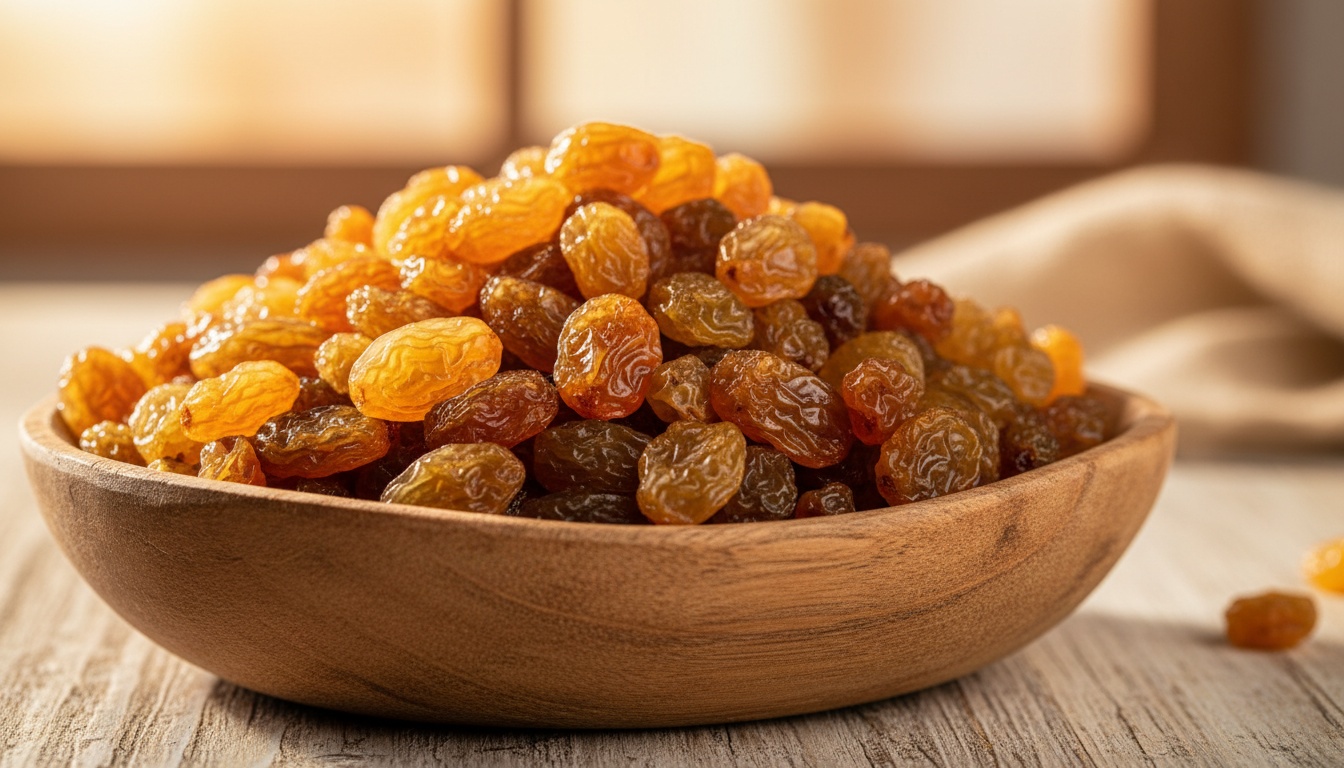
SO₂-treated Malayar & Thompson golden, by berry count
Golden raisins are not simply a colour of raisin — they are a process. The berry is dipped in an alkaline emulsion, sulphured with SO₂ and tunnel-dried under controlled heat rather than left in the sun, which is what arrests enzymatic browning and holds the bright amber-to-pale-gold colour that the grade sells on. That process is the whole commercial story: CBIL brokers golden raisins (Malayar from Iran, golden Thompson Seedless from India's Nashik and Sangli belts, and Turkish Type 9/10 golden) graded first on berry count per 100 g — typically 220–260 for jumbo through to 400+ for small — then on colour band against the physical standard, then on Sortex class (single, double or triple pass, which governs cap, stem, capstem and sub-standard berry carry-over). Moisture normally runs 13–16%; below 13% the berry hardens and lifts your bakery reject rate, above 16% it clumps and invites mould in a dry container. Sugar sits around 68–72% on a dry basis. SO₂ is the variable that decides which market you can sell into: we arrange lots at ≤ 1,000 ppm for general trade, ≤ 500 ppm where a destination or customer caps it, and genuinely SO₂-free golden where the buyer is clean-label — accepting that SO₂-free material browns over shelf-life and is a different product commercially.
Buy golden over its siblings when the raisin is visible in the finished product and the colour is doing the selling: muesli and breakfast cereal, premium retail packs, gifting mixes, panettone and fruited bakery, and confectionery where a dark berry would read as a defect. If the berry is going into a dark dough, a chocolate coating or a paste, you are paying a sulphuring and tunnel-drying premium for colour nobody sees — black or sultana material does the same job cheaper. Every lot we arrange ships against SGS or Intertek certification of moisture, SO₂ ppm, sugar, foreign matter, capstem count, mould-and-damage percentage and pesticide residue to your destination's MRLs, with phytosanitary documentation. Supply is structured in 10 kg and 12.5 kg lined cartons and 14 kg bags, dry or reefer container, on FOB, CFR and CIF terms — send us your count, colour band and SO₂ ceiling and we will match origin to it.
Indicative reference
$1,750–2,250 USD / MT
as at September 2026
Reference level only — not an offer, and reviewed quarterly. Levels shown are as at September 2026. Firm pricing is quoted per RFQ, subject to volume, terms and inspection.
Typical Specification
Specifications are indicative and adjusted to the agreed contract and destination requirements. Final spec confirmed on COA / SGS.
Available Grades
Applications
- Muesli & breakfast cereal
- Premium retail packing & gifting
- Fruited bakery & panettone
- Confectionery
- HORECA
Category
Agri-Foods, Spices & Nuts
Incoterms
FOB · CFR · CIF
Pricing basis
USD / MT
Inspection
SGS / Intertek at load port
Golden Raisins — buyer questions
What actually makes a raisin golden rather than black?
Process, not variety. Golden and black raisins can come off the same Thompson Seedless vine. Golden berries are alkaline-dipped, sulphured with SO₂ and tunnel-dried under controlled heat, which stops enzymatic browning. Black raisins are sun-dried with no sulphur and brown naturally over 2–3 weeks. That is why the two price differently and behave differently on shelf.
Can you supply SO₂-free golden raisins?
Yes, but understand the trade-off before you specify it. Without SO₂ the colour will drift toward amber and then brown across shelf-life, and it cannot be held bright any other way legitimately. If your customer is clean-label and accepts the colour drift, SO₂-free works. If they expect a bright pale gold at month nine, they are buying a sulphured product whether they like it or not.
What SO₂ limit should I write into the contract?
Work backwards from your destination and your customer, not from the trade default. Most general trade runs at ≤ 1,000 ppm. A number of retail programmes cap at 500 ppm, and some markets require a declared allergen statement above threshold regardless. Tell us the destination and the end customer and we will write the ceiling into the spec rather than shipping to a generic number.
What does Sortex class mean on a raisin contract?
It is how many optical-sorter passes the lot has been through, and it governs what gets carried over: capstems, stems, sub-standard and discoloured berries, and foreign matter. A triple-pass lot is visibly cleaner and costs more. For retail packing it is usually worth it; for a berry going into dough, a double pass is normally the honest choice.
Ready to source Golden Raisins?
Send your quantity, specification, preferred Incoterms and destination port. We'll verify supply and respond with a workable offer — usually within one business day.
Have Golden Raisins to sell? Submit an offer — we'll match it against live buyer demand.