
Ashwagandha Root
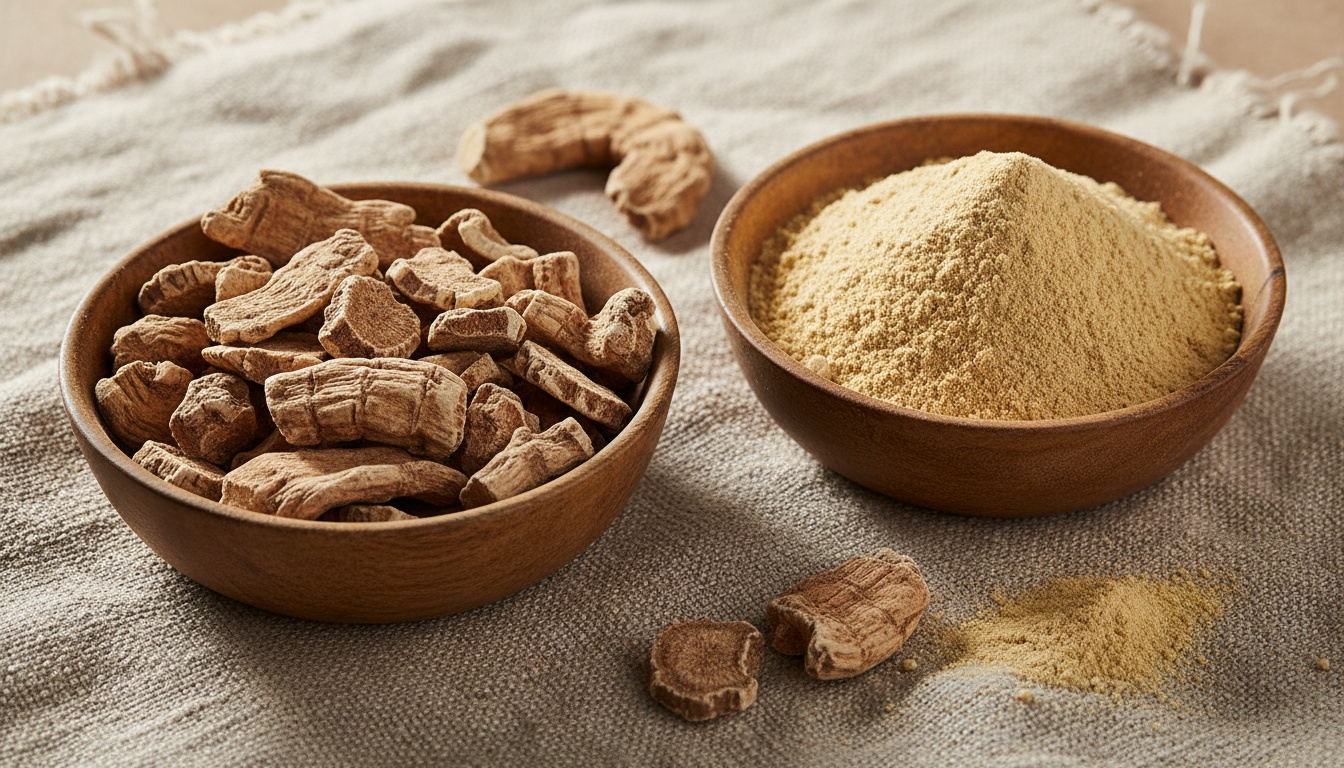
Nagori root, cut & sifted and powder by withanolide assay
CBIL brokers Indian ashwagandha (Withania somnifera) root from the Nagori belt in Rajasthan and the Neemuch and Mandsaur growing areas of Madhya Pradesh, in the three forms buyers contract against: whole root, cut-and-sifted (typically 5–20 mm) and powder milled to 80–100 mesh. Withanolide assay is the variable that prices the lot — root material commonly tests 0.3–0.8% total withanolides by HPLC, and extractors specify a floor because their yield is a direct function of it. Nagori root is the grade that carries the premium: it is thinner, paler and cleaner, with a higher root-to-crown ratio, and crown and stem admixture is the single most common reason a lot assays below spec. Shade-drying matters here rather than being a marketing line — sun-dried root loses assay and darkens, which shows up in both the certificate and the finished powder colour.
Buyers split cleanly by form. Extractors and standardised-ingredient houses take whole or cut-and-sifted root, because they mill on their own line and want to see what they are buying; nutraceutical and ayurvedic formulators packing capsules take powder to a defined mesh. If you are buying powder, specify mesh and the withanolide floor together — powder from crown-heavy root looks identical and assays lower. Every lot is arranged against SGS or Intertek certification of withanolides by HPLC, moisture, total and acid-insoluble ash, heavy metals to Codex limits, pesticide residue and microbiological load (total plate count, yeast and mould, Salmonella, E. coli), with steam-sterilised and ETO-free options for EU and US entry and organic-certified lots subject to crop. Supply is structured in 20kg and 25kg PP bags and lined cartons, container-load, on FOB, CFR and CIF terms.
Indicative reference
$3,200–4,500 USD / MT
as at September 2026
Reference level only — not an offer, and reviewed quarterly. Levels shown are as at September 2026. Firm pricing is quoted per RFQ, subject to volume, terms and inspection.
Typical Specification
Specifications are indicative and adjusted to the agreed contract and destination requirements. Final spec confirmed on COA / SGS.
Available Grades
Applications
- Nutraceuticals & supplements
- Botanical extraction
- Ayurvedic formulation
- Herbal tea & infusions
- Cosmetics
Category
Agri-Foods, Spices & Nuts
Incoterms
FOB · CFR · CIF
Pricing basis
USD / MT
Inspection
SGS / Intertek at load port
Ashwagandha Root — buyer questions
What withanolide percentage should I specify?
For raw root, 0.3% total withanolides by HPLC is a workable commercial floor and most Nagori material lands between 0.3% and 0.8%. Extractors normally set a floor because their yield tracks it directly; formulators packing root powder often do not need to pay for the top of that band. Tell us your application and we will not over-specify you — note that root assaying above ~1% is usually a standardised extract, not raw root, and is a different product entirely.
Why is Nagori root more expensive than general ashwagandha?
Root-to-crown ratio and cleanliness. Nagori material is thinner, paler and carries less crown and stem, which is what lifts assay and gives a lighter powder colour. Crown and stem admixture is the most common reason a lot assays below its certificate expectation, so if you are buying on assay, the grade difference is usually cheaper than the failed lot.
Should I buy whole root, cut-and-sifted, or powder?
Whole and cut-and-sifted if you mill on your own line or extract — you can see the material and judge crown content yourself. Powder if you are packing capsules or tablets and do not want a milling step. Powder hides admixture, so when buying powder specify mesh and the withanolide floor together and take the certificate at load port.
Can you supply organic-certified ashwagandha?
Subject to crop, yes. Organic lots ship with valid certification for your destination scheme alongside the standard heavy-metal, pesticide-residue and microbiological certification. Organic volume is materially tighter than conventional, so forward-contracting rather than buying spot is the sensible approach if you have committed annual demand.
Ready to source Ashwagandha?
Send your quantity, specification, preferred Incoterms and destination port. We'll verify supply and respond with a workable offer — usually within one business day.
Have Ashwagandha to sell? Submit an offer — we'll match it against live buyer demand.
More in Herbs & Roots